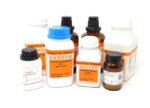
Description
Specifications Table
Product Name – Aluminum chloride, anhydrous AR
Quantity/Pack Size – 500 g
Form – Powder/Crystalline
Grade – AR (Analytical Reagent)
Application – Catalyst, Friedel-Crafts reactions, polymerization
Product Overview
Aluminum chloride, anhydrous AR grade, is a highly pure, white to pale yellow crystalline powder known for its strong Lewis acid properties. This reagent-grade chemical is essential for organic synthesis, particularly in Friedel-Crafts alkylation and acylation reactions, where it acts as a catalyst. Its hygroscopic nature requires careful handling and storage in airtight containers to prevent moisture absorption. The AR grade ensures minimal impurities, making it suitable for precise laboratory applications. With a high affinity for water, it readily forms hydrates, which can alter its reactivity. This compound is also used in polymerization processes and as a dehydrating agent in various chemical reactions. Proper storage in a cool, dry place is critical to maintain its anhydrous state and effectiveness. Always handle with appropriate safety measures, including gloves and protective eyewear, due to its corrosive nature.
FAQs
1. What is the shelf life of anhydrous aluminum chloride AR grade?
When stored in an airtight container away from moisture, anhydrous aluminum chloride AR grade can retain its purity for up to 2-3 years. Exposure to humidity significantly reduces its effectiveness.
2. Is this product compatible with glassware?
Yes, anhydrous aluminum chloride can be stored and handled in glass containers. However, ensure the glassware is dry and free from moisture to prevent premature hydrolysis.
3. Are there any alternatives to anhydrous aluminum chloride for Friedel-Crafts reactions?
Alternatives include ferric chloride (FeCl₃) or boron trifluoride (BF₃), though their reactivity and selectivity may differ. Anhydrous aluminum chloride remains the most commonly used catalyst for such reactions.
4. How should I dispose of unused or expired aluminum chloride?
Dispose of it according to local chemical waste regulations. Neutralize with a weak base (e.g., sodium bicarbonate) before disposal to minimize environmental impact.
5. Can this product be used in non-anhydrous conditions?
No, anhydrous aluminum chloride must remain moisture-free for optimal performance. Hydration alters its chemical properties and reduces catalytic efficiency.