Description
Specifications
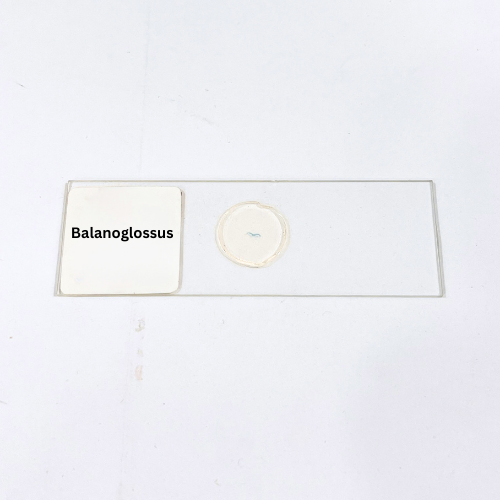
Product Name – Balanoglossus
Quantity/Pack Size – Single Preserved Specimen
Form – Preserved Marine Invertebrate
Grade – Laboratory Grade
Application – Morphological Studies, Microscopy, Marine Biology Analysis
product overview
Balanoglossus preserved specimens are meticulously prepared to maintain the complete anatomical structure of this marine invertebrate, ensuring optimal clarity for detailed morphological studies. Each specimen is preserved in a high-quality laboratory medium that prevents tissue degradation, maintaining color, texture, and structural features over extended periods. The preparation process ensures that delicate external and internal features, such as the proboscis, collar, and trunk regions, are intact and visible under microscopic observation. Laboratory-grade standards are adhered to throughout collection, fixation, and storage, guaranteeing consistent specimen quality suitable for prolonged use. The specimens are carefully labeled and packaged to facilitate easy identification and organized storage within laboratory settings. Their durability allows for repeated observation, handling, and educational demonstrations without compromising structural integrity. Balanoglossus specimens offer an accurate representation of marine invertebrate anatomy, supporting detailed examination, documentation, and comparative analysis. Their robust preparation ensures reliability and precision in laboratory environments, making them an essential resource for research, study, and reference. Users can conduct meticulous investigations into structural morphology, gaining clear insights into the biological organization and anatomical features of this marine species, with confidence in preservation quality and laboratory-grade consistency.
FAQs
1. How is the Balanoglossus specimen preserved?
The specimen is preserved in a laboratory-grade fixative ensuring long-term structural integrity and clarity for detailed examination.
2. Can this specimen be observed under standard microscopes?
Yes, the preserved specimen is compatible with both stereoscopic and compound microscopes for detailed observation.
3. What is the recommended storage method?
Store in a cool, dry area away from direct sunlight to maintain preservation quality and prevent degradation.
4. Are there alternative marine invertebrate specimens available?
Yes, other preserved marine organisms, such as amphioxus and echinoderm specimens, are available for comparative studies.
5. Is the specimen suitable for repeated handling and analysis?
Yes, careful handling allows repeated observations without compromising structural clarity or tissue preservation.