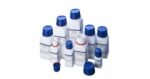
Description
Specifications Table
Product Name – BISMARCK BROWN Y (G) For Microscopy
Quantity/Pack Size – 25 g, 100 g, 1000 g
Form – Powder
Grade – Laboratory Grade
Application – Microscopy staining
Product Overview
Bismarck Brown Y (G) is a synthetic azo dye widely used in microscopy for its ability to stain cellular components with high contrast. This laboratory-grade powder offers consistent performance in histological and cytological applications, providing clear differentiation of nuclei, cytoplasm, and extracellular matrices. The dye exhibits excellent solubility in water and alcohol, ensuring uniform staining results across various sample types. Its stable chemical structure resists fading, making it ideal for long-term slide preservation. The product undergoes rigorous quality control to eliminate impurities that could interfere with staining accuracy. Researchers and technicians can rely on its predictable color intensity and compatibility with standard mounting media. The powder form allows for precise concentration adjustments based on specific protocol requirements. This Bismarck Brown Y variant maintains optimal pH stability, preventing color shifts during staining procedures. Its non-toxic formulation meets international safety standards for laboratory use.
FAQs
1. What is the chemical composition of Bismarck Brown Y?
Bismarck Brown Y is a diazo dye with the chemical formula C18H18N8O6S2, featuring two azo groups responsible for its staining properties.
2. How should Bismarck Brown Y be stored for long-term use?
Store in a tightly sealed container at room temperature, protected from light and moisture to maintain stability and prevent degradation.
3. What is the typical working concentration for microscopy applications?
Most protocols use a 0.1-1% aqueous solution, though optimal concentration may vary based on specific tissue types and staining requirements.
4. Is this product compatible with other common histological stains?
Yes, Bismarck Brown Y can be used in combination with eosin, hematoxylin, and other counterstains for differential staining techniques.
5. What safety precautions should be taken when handling this dye?
While non-toxic, standard laboratory safety measures including gloves and eye protection are recommended to prevent skin and eye irritation.