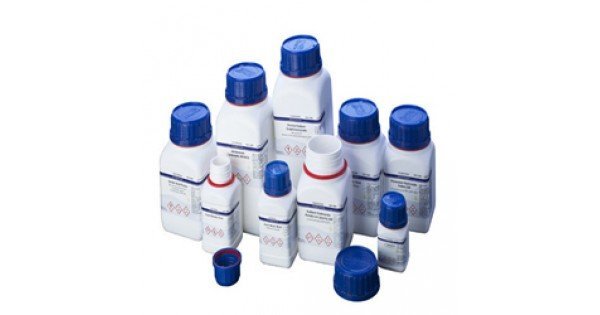
Description
Specifications Table
Product Name – Borax Carmine Grenacher
Quantity/Pack Size – 25 g
Form – Powder
Grade – Laboratory Grade
Application – Microscopy Staining
Product Overview
Borax Carmine Grenacher is a premium-grade histological stain designed for microscopy applications, delivering vibrant red coloration for enhanced cellular contrast. This water-soluble powder ensures uniform staining with minimal background interference, making it ideal for detailed microscopic analysis. The formulation adheres to stringent lab standards, ensuring reliability in research and diagnostic settings. Its fine particle size guarantees smooth dissolution, while the borax buffer maintains pH stability for consistent results. Free from impurities, this stain provides sharp, long-lasting visualization of tissue structures. Whether used in routine lab work or specialized studies, Borax Carmine Grenacher offers exceptional clarity and precision, eliminating the need for frequent restaining. The product is packaged in a sealed container to preserve its potency and prevent moisture absorption, ensuring long shelf life under proper storage conditions.
FAQs
1. What is the solubility of Borax Carmine Grenacher in water?
Borax Carmine Grenacher is highly soluble in water, forming a clear red solution when properly dissolved. For best results, use distilled or deionized water and stir gently to avoid clumping.
2. Can this stain be used with other histological dyes?
Yes, Borax Carmine Grenacher can be combined with counterstains like hematoxylin or eosin for differential staining, but compatibility tests are recommended to avoid precipitation or color shifts.
3. How should this product be stored to maintain its effectiveness?
Store the powder in a tightly sealed container at room temperature, away from direct sunlight and moisture. Avoid exposure to extreme temperatures or humidity to prevent degradation.
4. Is this stain suitable for both plant and animal tissue staining?
The stain is primarily optimized for animal tissues, particularly muscle and connective fibers, but can be adapted for plant tissues with adjusted protocols and pH modifications.
5. What is the typical staining duration for optimal results?
Staining time varies by tissue type, but 5–15 minutes is standard for most applications. Overstaining may require differentiation with acidic alcohol to refine contrast.