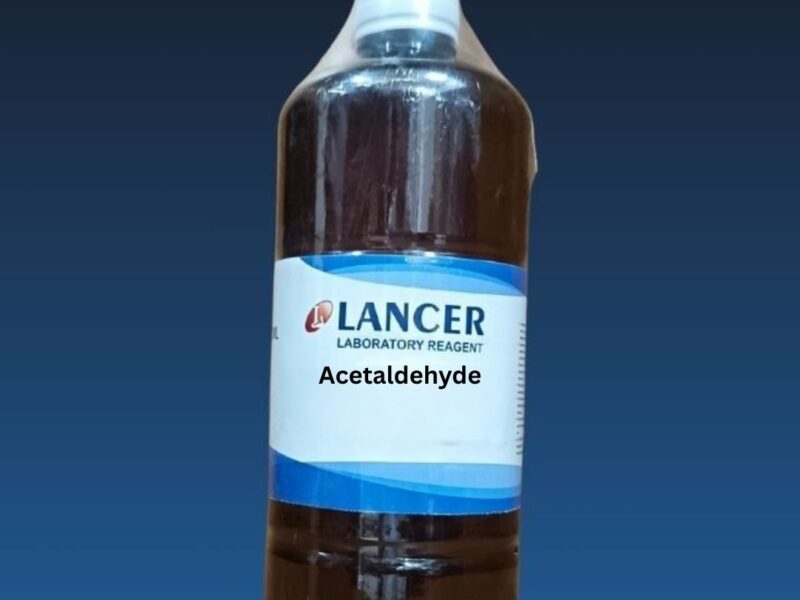
Description
Specifications Table
Product Name – Boron Trifluoride Dibutyl Etherate, 30-35%, (BF3), AcroSeal® Quantity/Pack Size – 100ML Form – Liquid Grade – Reagent Application – Catalyst, Lewis acid, organic synthesis
Product Overview
Boron trifluoride dibutyl etherate (BF3·O(C4H9)2) is a colorless to pale yellow liquid complex of boron trifluoride with dibutyl ether, supplied at 30-35% concentration. This reagent-grade solution is stabilized in AcroSeal® packaging to prevent moisture contamination and hydrolysis, ensuring consistent performance in sensitive applications. The etherate form enhances solubility in organic solvents while maintaining the strong Lewis acidity of BF3, making it highly effective as a catalyst in Friedel-Crafts reactions, polymerization processes, and other acid-mediated transformations. The product is characterized by its high reactivity with nucleophiles and its ability to coordinate with electron-rich substrates. Its moderate volatility (bp ~120°C) allows for controlled dosing in laboratory setups. The AcroSeal® bottle features a PTFE-lined cap to minimize atmospheric exposure, while the amber glass construction provides UV protection. This formulation is particularly valued for its balanced reactivity profile, offering sufficient catalytic activity without the extreme corrosiveness of anhydrous BF3 gas.
FAQs
1. What precautions should be taken when handling BF3 dibutyl etherate?
Always use in a well-ventilated fume hood with proper PPE including nitrile gloves and safety goggles. The solution is corrosive and moisture-sensitive, so avoid contact with water or skin. Work with small quantities to minimize exposure to fumes.
2. Can this product be used as a substitute for anhydrous BF3 gas?
While it provides similar Lewis acidity, the etherate form has reduced reactivity compared to anhydrous BF3. It’s suitable for most organic synthesis applications but may require adjusted reaction conditions or longer reaction times for equivalent results.
3. What is the typical shelf life of this product when stored properly?
When stored unopened in its original AcroSeal® packaging at room temperature, the product maintains its specified concentration for 24 months from the date of manufacture. Once opened, use within 6 months for optimal performance.
4. How should this chemical be disposed of after use?
Neutralize with sodium bicarbonate solution before disposal. Collect all residues in a dedicated hazardous waste container and follow local regulations for chemical waste disposal. Never pour down drains or mix with other laboratory waste.
5. What compatibility issues should be considered with this reagent?
Avoid contact with strong bases, oxidizing agents, and reducing agents. It reacts violently with water and alcohols. Use only with compatible solvents like dichloromethane, toluene, or hexanes, and ensure all glassware is thoroughly dried before use.