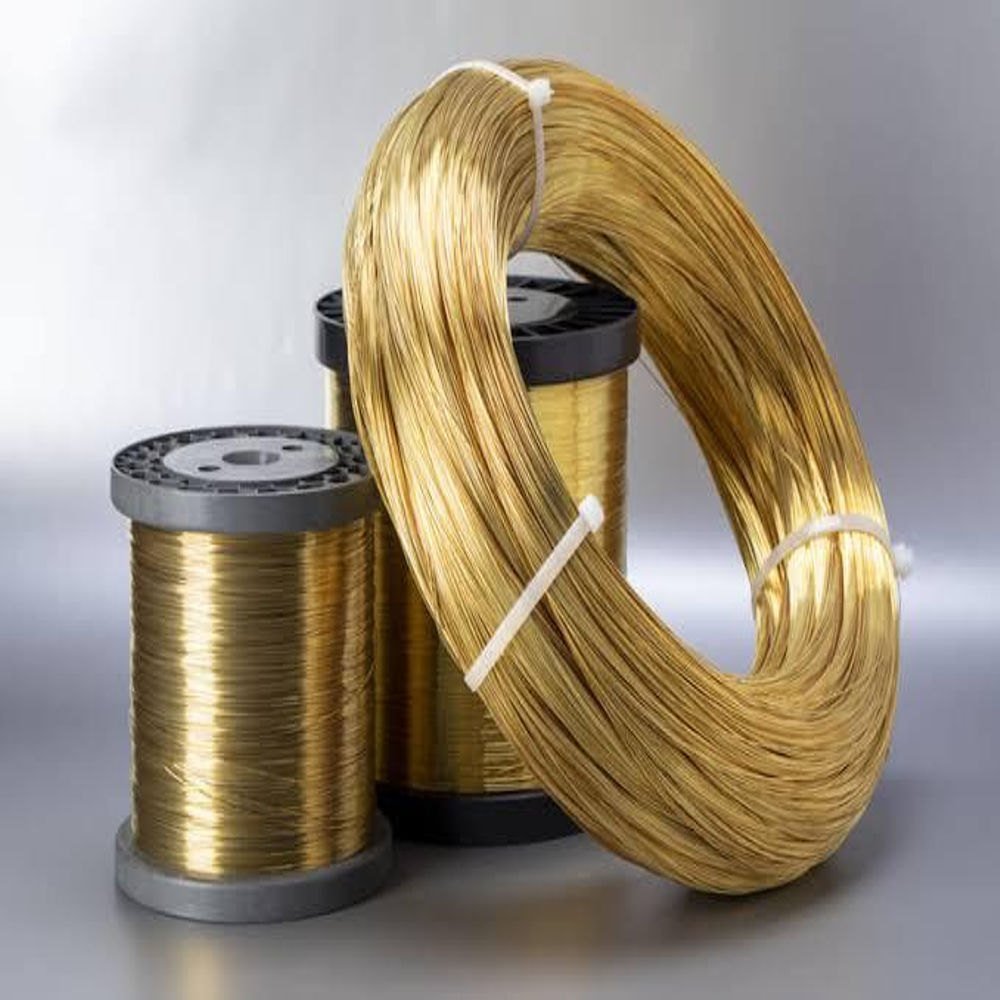
Description
Specifications
Product Name – Brass Wire
Quantity/Pack Size – Single Roll
Form – Wire
Grade – Laboratory Grade
Application – Electrical Experiments, Conductivity Testing, Precision Lab Work
product overview
The Brass Wire is a premium laboratory wire designed for reliable electrical conductivity and mechanical flexibility. Constructed from a carefully engineered copper-zinc alloy, the wire exhibits high durability, excellent corrosion resistance, and consistent performance across various experimental setups. Its uniform diameter and smooth surface ensure precise measurements and easy handling, allowing seamless integration into different laboratory instruments. The material’s mechanical strength allows it to withstand repeated bending and shaping without breaking, making it versatile for a wide range of applications. The Brass Wire maintains its structural and electrical integrity even under varying temperature and environmental conditions, ensuring long-term reliability. It undergoes rigorous quality checks to confirm tensile strength, dimensional accuracy, and corrosion resistance, offering consistent performance for sensitive experiments. Its combination of flexibility, conductivity, and resistance to oxidation provides a dependable solution for tasks requiring stable electrical pathways or mechanical precision. The wire’s high-quality alloy composition delivers minimal variance in electrical properties, guaranteeing reproducible results in experiments that demand accuracy. Ideal for laboratories needing consistent, corrosion-resistant wiring material, the Brass Wire balances strength, flexibility, and conductivity in a single high-performance product. With careful engineering and robust manufacturing standards, this wire ensures a reliable and practical choice for precision laboratory work, maintaining stability and functionality across repeated use and handling.
FAQs
1. What gauge sizes are available for Brass Wire?
Brass Wire is typically available in diameters ranging from 0.3 mm to 2 mm, suitable for various experimental requirements.
2. Is Brass Wire compatible with standard laboratory power sources?
Yes, it works well with low-voltage and controlled electrical setups, providing stable conductivity and performance.
3. Are there alternative conductive wires available?
Alternatives include copper wire, nickel-chromium wire, or aluminum wire depending on required conductivity and experimental parameters.
4. How should Brass Wire be stored to ensure quality?
Store in a dry, cool environment, away from moisture or corrosive chemicals, preferably in a sealed container or spool.
5. Where can additional Brass Wire be sourced?
Additional rolls can be obtained from authorized laboratory suppliers or certified distributors to maintain consistent quality and specifications.