Description
Specifications Table
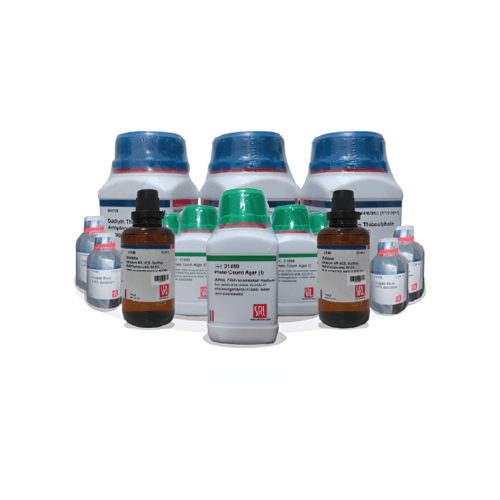
Product Name – Brilliant Green Bile Agar Quantity/Pack Size – 100 Gms, 500 Gms Form – Powder Grade – Laboratory Grade Application – Bacterial Isolation and Identification
Product Overview
Brilliant Green Bile Agar is a specialized culture medium designed for the isolation and identification of enteric bacteria, particularly Salmonella and Shigella species. This agar contains brilliant green dye, which inhibits the growth of Gram-positive bacteria and allows for the selective growth of Gram-negative bacteria. The bile salts present in the medium further enhance the selectivity by inhibiting the growth of non-enteric Gram-negative bacteria. This makes Brilliant Green Bile Agar an essential tool in clinical and research laboratories for the detection and study of enteric pathogens. The medium is formulated to ensure optimal growth conditions for the target bacteria, providing clear and distinct colonies for accurate identification.
FAQs
1. What is Brilliant Green Bile Agar used for?
Brilliant Green Bile Agar is used for the selective isolation and identification of enteric bacteria, particularly Salmonella and Shigella species.
2. Is Brilliant Green Bile Agar suitable for Gram-positive bacteria?
No, Brilliant Green Bile Agar is not suitable for Gram-positive bacteria. The brilliant green dye and bile salts in the medium inhibit the growth of Gram-positive bacteria.
3. What are the storage conditions for Brilliant Green Bile Agar?
Brilliant Green Bile Agar should be stored in a cool, dry place away from direct sunlight. It is recommended to store the powdered form in an airtight container to maintain its effectiveness.
4. Can Brilliant Green Bile Agar be used for environmental sampling?
Yes, Brilliant Green Bile Agar can be used for environmental sampling to detect the presence of enteric bacteria in water, soil, and other environmental samples.
5. Is Brilliant Green Bile Agar compatible with other culture media?
Brilliant Green Bile Agar can be used in conjunction with other selective and differential media to enhance the identification of specific bacterial species. However, it is important to follow proper laboratory protocols to avoid cross-contamination.