Description
Specifications Table
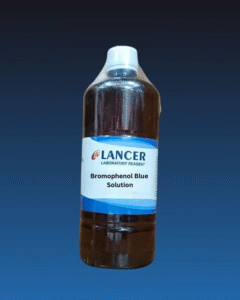
| Product Name | Bromophenol Blue Solution | 276 | Lancer |
|---|---|
| Quantity/Pack Size | 125 ml |
| Form | Liquid Solution |
| Grade | Laboratory Grade |
| Application | Electrophoresis, pH Indicator, Protein Staining |
Product Description
Bromophenol Blue Solution is a versatile laboratory reagent widely used in molecular biology and biochemistry. This high-quality solution serves as a reliable pH indicator and tracking dye in electrophoresis, ensuring clear visualization of nucleic acids and proteins during gel analysis. The ready-to-use formula eliminates the need for preparation, saving valuable lab time while maintaining consistency in results.
Ideal for students, researchers, and educators, this bromophenol blue solution is formulated to meet stringent laboratory standards. Its stable composition ensures accurate performance in various applications, including DNA/RNA gel electrophoresis and protein assays. The 125 ml pack size offers convenience for frequent use without excessive storage concerns.
Whether you’re setting up a teaching lab or conducting advanced research, this solution provides the precision and reliability required for reproducible experiments. eqipped ensures that each batch undergoes rigorous quality checks, so you can trust the consistency of your results every time.
Need a dependable dye for your next electrophoresis run? Buy bromophenol blue solution online today and experience hassle-free lab work.
Key Applications
This solution is particularly useful for:
- Tracking dye in agarose and polyacrylamide gel electrophoresis
- pH indication in the range of 3.0 to 4.6 (yellow to blue transition)
- Protein staining in SDS-PAGE gels
- Educational demonstrations of pH changes
- Qualitative analysis in biochemical assays
Why This Solution Stands Out
The bromophenol blue solution from Lancer offers several advantages for laboratory use. Its pre-mixed formulation ensures uniform concentration, eliminating variability that can occur with manual preparation. The solution’s stability at room temperature makes it convenient for daily lab operations without requiring special storage conditions.
For educational institutions, this product serves as an excellent teaching tool for demonstrating principles of electrophoresis and pH indicators. The vivid color change provides clear visual results that help students grasp fundamental concepts in biochemistry and molecular biology.
Safety and Handling
While bromophenol blue is generally considered safe for laboratory use, proper handling procedures should always be followed. Wear appropriate personal protective equipment including gloves and safety goggles when handling the solution. In case of skin contact, wash thoroughly with soap and water. For eye contact, rinse immediately with plenty of water and seek medical advice if irritation persists.
Store the solution in a cool, dry place away from direct sunlight. Keep the container tightly closed when not in use to prevent evaporation or contamination. The solution has a long shelf life when stored properly, making it a cost-effective choice for laboratories with intermittent usage patterns.
Compatibility with Laboratory Equipment
This bromophenol blue solution is compatible with standard laboratory equipment used in electrophoresis. It works well with most gel documentation systems and can be visualized under standard UV or white light transilluminators. The solution’s concentration is optimized to provide clear bands without over-staining, which could interfere with downstream applications.
For researchers working with sensitive samples, this solution offers the advantage of being non-reactive with most biological molecules, ensuring it doesn’t interfere with your experimental results. Its water-soluble nature makes it easy to incorporate into various buffer systems commonly used in molecular biology protocols.
Educational Value
For educators and students, this bromophenol blue solution provides an excellent hands-on learning experience. It helps demonstrate key concepts such as:
- Principles of gel electrophoresis
- pH indicator color changes
- Protein migration patterns
- Buffer system interactions
- Molecular weight estimation
The solution’s consistent performance makes it ideal for classroom demonstrations where reproducible results are crucial for effective teaching. Many educational institutions across India have incorporated this product into their practical curriculum due to its reliability and ease of use.
FAQs
What is bromophenol blue solution used for in laboratories?
Bromophenol blue solution serves primarily as a tracking dye in electrophoresis and as a pH indicator. In gel electrophoresis, it helps visualize the progress of DNA/RNA or protein migration. As a pH indicator, it changes color from yellow to blue between pH 3.0 and 4.6, making it useful for various biochemical assays.
How should I store bromophenol blue solution?
Store the solution at room temperature, away from direct sunlight and heat sources. Keep the container tightly sealed to prevent evaporation. When stored properly, the solution maintains its stability for extended periods, typically 12-24 months from the date of manufacture.
Is this solution ready to use or does it need dilution?
This bromophenol blue solution comes ready to use. No additional preparation or dilution is required for standard applications in electrophoresis. However, for specific protocols that might require different concentrations, you can dilute it with appropriate buffers as needed.
Can I use this solution for both DNA and protein electrophoresis?
Yes, this solution is suitable for both DNA/RNA and protein electrophoresis. It’s commonly used in agarose gels for nucleic acids and in SDS-PAGE gels for proteins. The dye migrates ahead of most biomolecules, allowing you to monitor the progress of your separation.
What safety precautions should I take when using bromophenol blue?
While generally safe, always wear gloves and safety goggles when handling. Avoid skin and eye contact. In case of spills, clean up immediately with appropriate absorbents. Though not highly toxic, it’s good practice to handle all laboratory chemicals with care and dispose of waste according to your institution’s chemical waste guidelines.