Description
Specifications Table
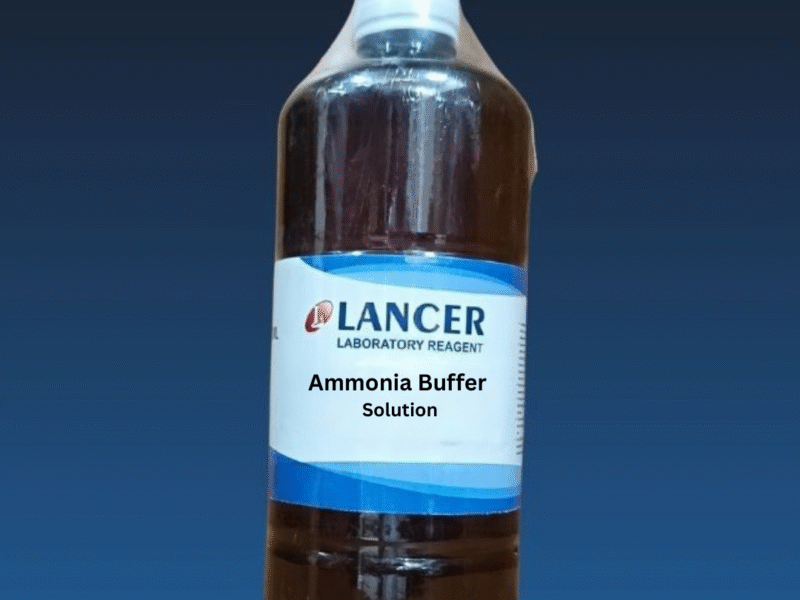
Product Name – Buffer solution pH 7, Phosphate buffer, traceable to NIST, ready to use
Quantity/Pack Size – 1LT, 500ML
Form – Liquid
Grade – NIST-traceable
Application – pH calibration, buffer preparation, analytical testing
Product Overview
This pH 7 phosphate buffer solution is a high-precision, ready-to-use formulation designed for accurate pH calibration and buffer preparation in laboratory settings. Traceable to NIST (National Institute of Standards and Technology), it ensures reliable and consistent results for critical applications. The solution is prepared using analytical-grade reagents, guaranteeing minimal impurities and optimal performance. Its stable pH value of 7 makes it ideal for maintaining neutral conditions in biochemical assays, cell culture, and enzymatic reactions. The liquid form eliminates the need for manual preparation, saving time and reducing the risk of contamination. Whether used in research, quality control, or routine laboratory procedures, this buffer solution delivers exceptional accuracy and reproducibility. The 1-liter and 500-mL pack sizes offer flexibility for different usage volumes, ensuring cost-effective and convenient handling. Store at room temperature in a tightly sealed container to maintain stability and extend shelf life.
FAQs
1. What is the shelf life of this pH 7 phosphate buffer solution?
The shelf life is typically 24 months from the date of manufacture when stored unopened at room temperature. Once opened, use within 6 months for optimal performance.
2. Is this buffer solution compatible with cell culture applications?
Yes, this pH 7 phosphate buffer is suitable for cell culture applications as it maintains a neutral pH, which is essential for cell viability and growth.
3. Can this buffer be used for pH meter calibration?
Absolutely, this NIST-traceable buffer solution is specifically designed for pH meter calibration, ensuring accurate and reliable measurements.
4. Are there any alternatives to this phosphate buffer for pH 7 applications?
Alternatives include Tris buffer or HEPES buffer, but phosphate buffer is preferred for its stability and compatibility with a wide range of biological systems.
5. How should this buffer solution be stored to maintain its quality?
Store the solution at room temperature (15-25°C) in its original, tightly sealed container. Avoid exposure to direct sunlight or extreme temperatures to prevent degradation.
—