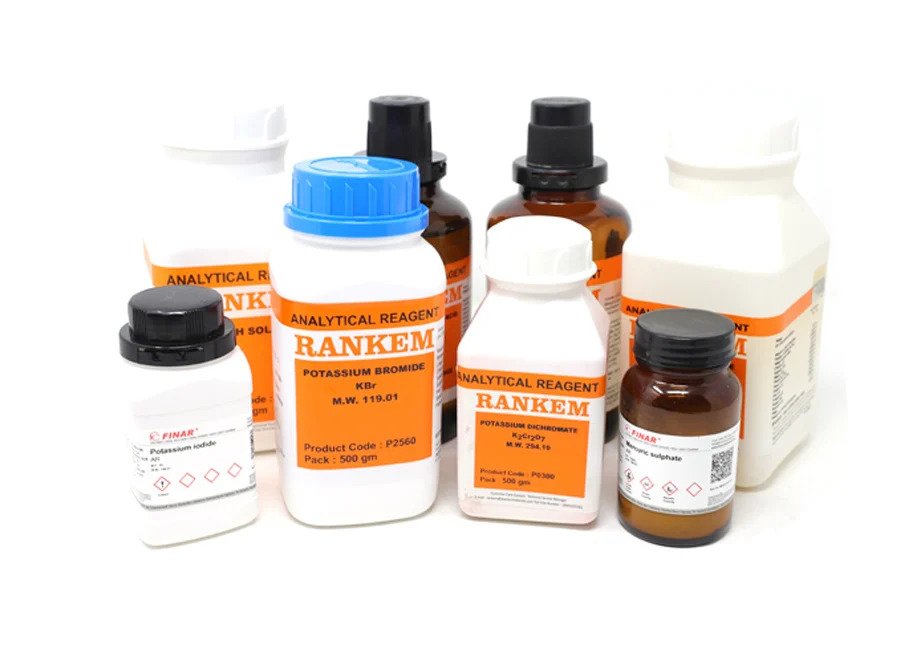
Description
Specifications Table
Product Name – Calcium phosphate dibasic LR
Quantity/Pack Size – 500 g
Form – Powder
Grade – LR (Laboratory Reagent)
Application – Analytical chemistry, research, buffer preparation
Product Overview
Calcium phosphate dibasic LR is a high-quality laboratory reagent designed for precision in analytical and research applications. This fine, white powder is a dibasic form of calcium phosphate, offering excellent solubility in dilute acids while remaining insoluble in water and ethanol. Its LR (Laboratory Reagent) grade ensures minimal impurities, making it suitable for critical experiments where consistency and reliability are paramount. The compound is widely recognized for its role in buffer systems, precipitation reactions, and as a source of phosphate ions in controlled environments. Its stable chemical structure provides reproducible results, reducing variability in experimental outcomes. Whether used in qualitative analysis or quantitative assays, Calcium phosphate dibasic LR maintains its integrity across a range of laboratory conditions. The 500 g pack size offers an optimal balance between bulk availability and freshness, minimizing the risk of contamination or degradation over time. Store in a cool, dry place to preserve its chemical properties and extend shelf life.
FAQs
1. Is Calcium phosphate dibasic LR soluble in water?
No, Calcium phosphate dibasic LR is insoluble in water but dissolves in dilute acids like hydrochloric or nitric acid.
2. What is the difference between dibasic and monobasic calcium phosphate?
Dibasic calcium phosphate contains two replaceable hydrogen ions per molecule, while monobasic has only one, affecting solubility and pH behavior.
3. Can this be used for cell culture applications?
LR grade is not typically recommended for cell culture; use cell culture-tested or molecular biology grades for such applications.
4. How should I store Calcium phosphate dibasic LR to maintain purity?
Store in an airtight container in a cool, dry place, away from moisture and incompatible substances like strong acids or oxidizing agents.
5. What alternatives exist if I need a higher purity grade?
For higher purity, consider AR (Analytical Reagent) or ACS (American Chemical Society) grades, which undergo stricter quality control.