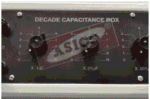
Description
Specifications Table
Product Material – Nickel-Plated Brass
Grade – Laboratory Grade
Application – Resistance Measurement, Wheatstone Bridge Experiments
Product Overview
Callender & Griffin’s Bridge is a precision-engineered physics instrument designed for accurate resistance measurements in laboratory settings. Constructed from high-quality nickel-plated brass, this bridge ensures durability and corrosion resistance, making it ideal for repeated use in experimental setups. The instrument follows the Wheatstone bridge principle, allowing for precise determination of unknown resistances by balancing the circuit. Its robust build and reliable performance make it a staple in physics labs, where accuracy and consistency are critical. The bridge is designed without accessories, offering flexibility for custom configurations based on specific experimental needs. Whether used for educational demonstrations or advanced research, this instrument delivers consistent results, reducing measurement errors and improving experimental reliability. The smooth, adjustable components ensure ease of use, while the sturdy construction guarantees long-term functionality. Perfect for students, researchers, and educators, this bridge simplifies complex resistance measurements without compromising on precision.
FAQs
1. What is the primary application of Callender & Griffin’s Bridge?
This bridge is primarily used for measuring unknown resistances using the Wheatstone bridge principle, ensuring high accuracy in physics experiments.
2. Is this bridge compatible with standard laboratory power supplies?
Yes, it is designed to work with standard low-voltage DC power supplies commonly used in lab setups.
3. Are there any alternatives to this bridge for resistance measurements?
Alternatives include digital multimeters or slide wire bridges, but Callender & Griffin’s Bridge offers superior precision for educational and research applications.
4. How should this bridge be stored to maintain its accuracy?
Store it in a dry, dust-free environment, preferably in a protective case, to prevent corrosion and maintain calibration.
5. Can this bridge be used for high-resistance measurements?
While it is optimized for standard resistance ranges, additional configurations or accessories may be required for very high-resistance measurements.