Description
Specifications Table
Product Material – Borosilicate glass and metal components
Grade – Laboratory/educational grade
Application – Determining electron charge-to-mass ratio via Thomson’s method
Product Overview
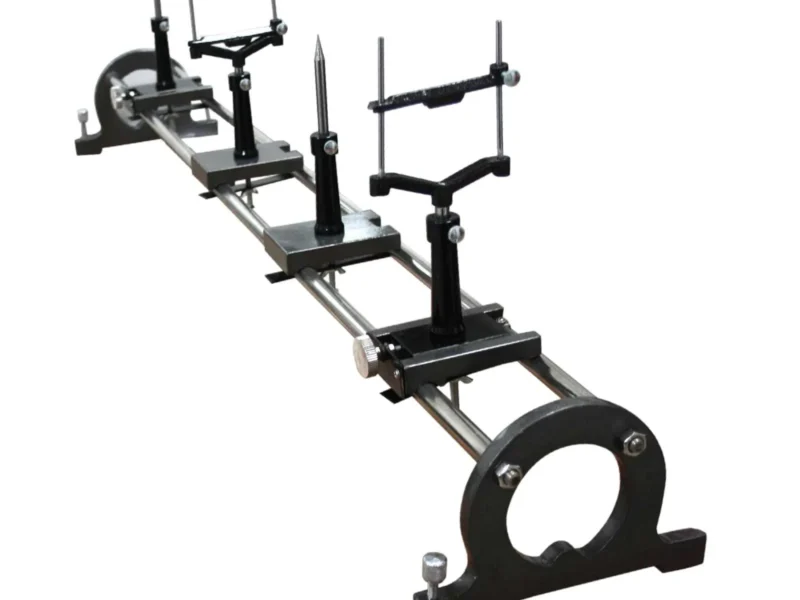
The Charge-to-Mass Ratio (e/m) Apparatus by Thomson Method is a precision-engineered lab instrument designed for accurate determination of the electron’s charge-to-mass ratio. Constructed with high-quality borosilicate glass and durable metal components, this apparatus ensures reliability and longevity in experimental setups. The setup includes a deflection tube, Helmholtz coils, and a power supply unit, allowing users to observe electron beam deflection under controlled magnetic fields. The apparatus is calibrated for minimal error, providing consistent and reproducible results. Its robust design minimizes external interference, ensuring high accuracy in measurements. Ideal for physics laboratories, this instrument adheres to educational and research-grade standards, making it a trusted choice for experiments requiring precise electron behavior analysis. The apparatus is user-friendly, with clear markings and easy assembly, reducing setup time while maintaining experimental integrity.
FAQs
1. What is the principle behind the e/m apparatus by Thomson’s method?
The apparatus works on the principle of deflecting an electron beam using perpendicular electric and magnetic fields, allowing the calculation of the electron’s charge-to-mass ratio based on the deflection observed.
2. Is this apparatus compatible with standard lab power supplies?
Yes, the e/m apparatus is designed to work with standard DC power supplies commonly found in physics laboratories, ensuring seamless integration into existing setups.
3. Are there any alternatives to Thomson’s method for measuring e/m?
Alternative methods include using a fine-beam tube or mass spectrometers, but Thomson’s method remains a classic and widely taught approach due to its simplicity and educational value.
4. How should the e/m apparatus be stored when not in use?
Store the apparatus in a dry, dust-free environment, preferably in its original packaging or a protective case to prevent damage to the glass components and ensure long-term accuracy.
5. What safety precautions should be taken while using this apparatus?
Always ensure the power supply is properly grounded, avoid touching live components, and handle the glass tube with care to prevent breakage. Use in a well-ventilated area if high voltages are involved.