Description
Specifications
Product Name – Chloroplast Model
Quantity/Pack Size – Single Unit
Form – 3D Anatomical Replica
Grade – Laboratory Grade
Application – Organelle Observation, Structural Visualization, Laboratory Demonstration
product overview
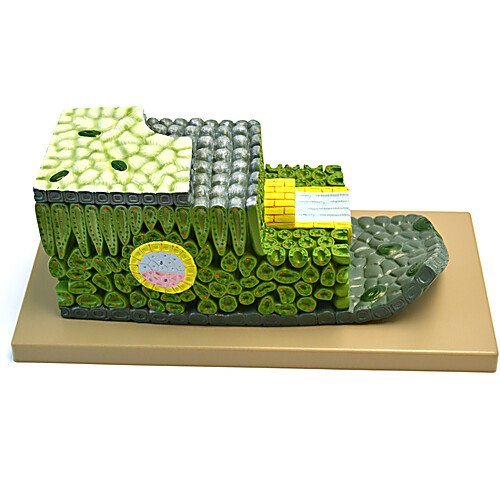
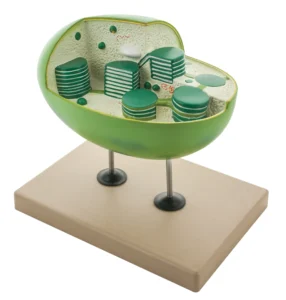
The Chloroplast Model is a high-quality, laboratory-grade 3D replica designed to present the internal structure of a chloroplast with exceptional clarity and detail. Crafted from durable, non-toxic materials, the model accurately depicts thylakoid stacks, stroma, granum, lamellae, and chlorophyll distribution, highlighting key structural features for clear visualization. Color-coded elements enhance differentiation between various internal components, enabling detailed observation of spatial arrangements and interconnections within the organelle. Mounted on a stable base, the model ensures secure handling and prevents damage during laboratory demonstrations and structured observation sessions. Its precise design allows for repeated use while maintaining dimensional and structural accuracy over time. The model’s robust construction and scientifically accurate detailing facilitate enhanced understanding of organelle organization, internal architecture, and functional arrangement within plant cells. This 3D representation of chloroplast anatomy provides a durable and visually informative tool suitable for laboratory environments, enabling users to examine the intricate internal components, compare spatial relationships, and analyze structural features with clarity. Ideal for long-term laboratory use, the model combines durability with accurate anatomical representation, allowing for repeated observation, demonstration, and analysis of chloroplast morphology and internal structure in a professional laboratory setting.
FAQs
1. Does this model highlight all internal chloroplast structures?
Yes, it displays thylakoid stacks, stroma, lamellae, and chlorophyll arrangements in precise detail.
2. Can it be combined with other plant cell organelle models?
Yes, it is compatible for comparative studies alongside other laboratory-grade organelle models.
3. What is the recommended way to store this model?
Store in a dry, dust-free environment away from direct sunlight to maintain color and structural integrity.
4. Are there alternative models for different plant organelles?
Yes, alternative laboratory models for mitochondria, nuclei, and other plant organelles are available for observation.
5. Is this model durable enough for repeated handling?
Yes, it is made with high-quality materials designed for frequent laboratory handling and demonstrations.