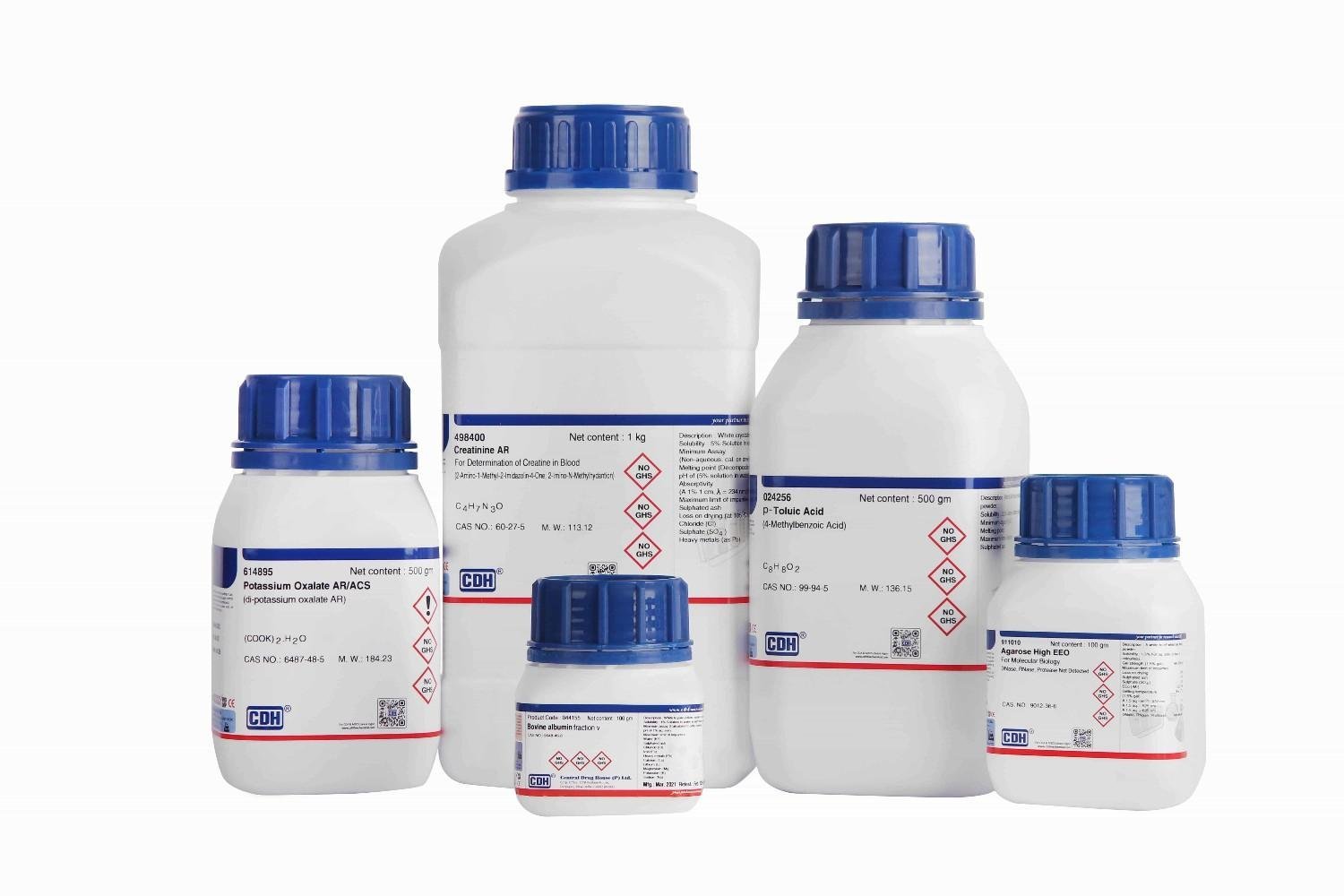
Description
Specifications Table
| Product Name | Citric Acid Anhydrous For Molecular Biology | 922000 | CDH |
|---|---|
| Pack Size | 500g |
| Form | Powder |
| Grade | Molecular Biology |
| Application | Buffer preparation, biochemical assays, molecular biology research |
Product Description
When precision matters in your molecular biology experiments, the quality of your reagents can make all the difference. Citric acid anhydrous from CDH offers the purity and consistency researchers need for reliable results. This molecular biology grade citric acid is specifically processed to meet the stringent requirements of sensitive applications where even trace impurities can affect outcomes.
In molecular biology labs across India, citric acid plays a crucial role in buffer solutions, helping maintain the optimal pH for enzymatic reactions. Whether you’re working on DNA extraction, protein purification, or cell culture media preparation, this high-quality citric acid provides the stable foundation your experiments require. The anhydrous form ensures accurate weighing and consistent results batch after batch.
Students and researchers will appreciate how this citric acid dissolves completely in water, creating clear solutions without residual particles that could interfere with sensitive assays. The fine powder form makes it easy to measure precise quantities, while the molecular biology grade certification gives confidence in its suitability for demanding applications.
For educational institutions and research facilities looking to maintain high standards without compromising on budget, this CDH citric acid anhydrous represents an excellent balance of quality and value. Each batch undergoes rigorous quality control to ensure it meets the specifications required for molecular biology work.
Upgrade your lab’s buffer preparation with molecular biology grade citric acid from eqipped – where quality meets affordability for Indian researchers.
Beyond its primary use in buffer systems, citric acid finds applications in various molecular biology protocols. It serves as a chelating agent, helping to sequester metal ions that might otherwise interfere with enzymatic reactions. In some protocols, it’s used in DNA extraction buffers to help lyse cells and protect nucleic acids during the isolation process.
The versatility of this reagent makes it a staple in both teaching labs and advanced research facilities. From undergraduate practicals to published research, this citric acid anhydrous maintains its performance across different applications. Its stability at room temperature also makes it convenient for labs with limited cold storage space.
Applications in Molecular Biology
Buffer Preparation: Essential component in citrate buffers used in various molecular biology protocols
Enzyme Assays: Helps maintain optimal pH conditions for enzymatic reactions
Cell Culture: Used in media preparation for maintaining cell viability
Nucleic Acid Isolation: Component in some DNA/RNA extraction protocols
Protein Studies: Used in protein purification and crystallization experiments
Why This Grade Matters
Not all citric acid is created equal when it comes to molecular biology applications. The molecular biology grade designation means this product has been tested and certified to contain minimal levels of contaminants that could interfere with sensitive biological systems. Unlike food grade or industrial citric acid, this version undergoes additional purification steps to remove trace metals, nucleases, and other potential interferents.
For researchers working with PCR, DNA sequencing, or protein expression systems, using the right grade of citric acid can mean the difference between clear results and frustrating inconsistencies. The investment in quality reagents pays off in reduced experimental variability and more reliable data.
Storage and Handling
Store this citric acid anhydrous in a cool, dry place away from moisture. Keep the container tightly sealed when not in use to prevent absorption of atmospheric water. While citric acid is generally stable, proper storage helps maintain its anhydrous properties and extends shelf life.
When handling, use standard laboratory safety practices. Though citric acid is relatively safe, it’s good practice to wear gloves and safety glasses, especially when working with larger quantities. Always work in a well-ventilated area or under a fume hood when preparing solutions.
FAQs
What makes molecular biology grade citric acid different from regular citric acid?
Molecular biology grade citric acid undergoes additional purification to remove contaminants like trace metals, nucleases, and other substances that could interfere with sensitive biological experiments. It’s tested to ensure consistency and purity suitable for research applications.
Can I use this citric acid for food or beverage applications?
While chemically similar, this product is specifically processed for laboratory use and isn’t certified for food applications. For food-grade citric acid, you should look for products with appropriate food safety certifications.
How should I prepare a 1M citric acid solution for my buffer?
To prepare a 1M solution, dissolve 192.12g of citric acid anhydrous in water and adjust to 1 liter final volume. For precise applications, use a volumetric flask and consider the temperature when preparing solutions.
What’s the shelf life of this citric acid anhydrous?
When stored properly in its original container at room temperature, this product typically has a shelf life of 3-5 years. Always check the expiration date on your specific batch.
Does eqipped offer bulk quantities of this citric acid for institutional buyers?
Yes, eqipped provides competitive pricing for educational institutions and research facilities requiring larger quantities. Contact our customer service team to discuss bulk ordering options and institutional discounts.