Description
Specifications Table
Product Name – Clinometer
Quantity/Pack Size – Single Piece
Form – Mechanical Instrument
Grade – Laboratory/Field Grade
Application – Angle measurement, slope determination, geography and physics studies
Product Overview
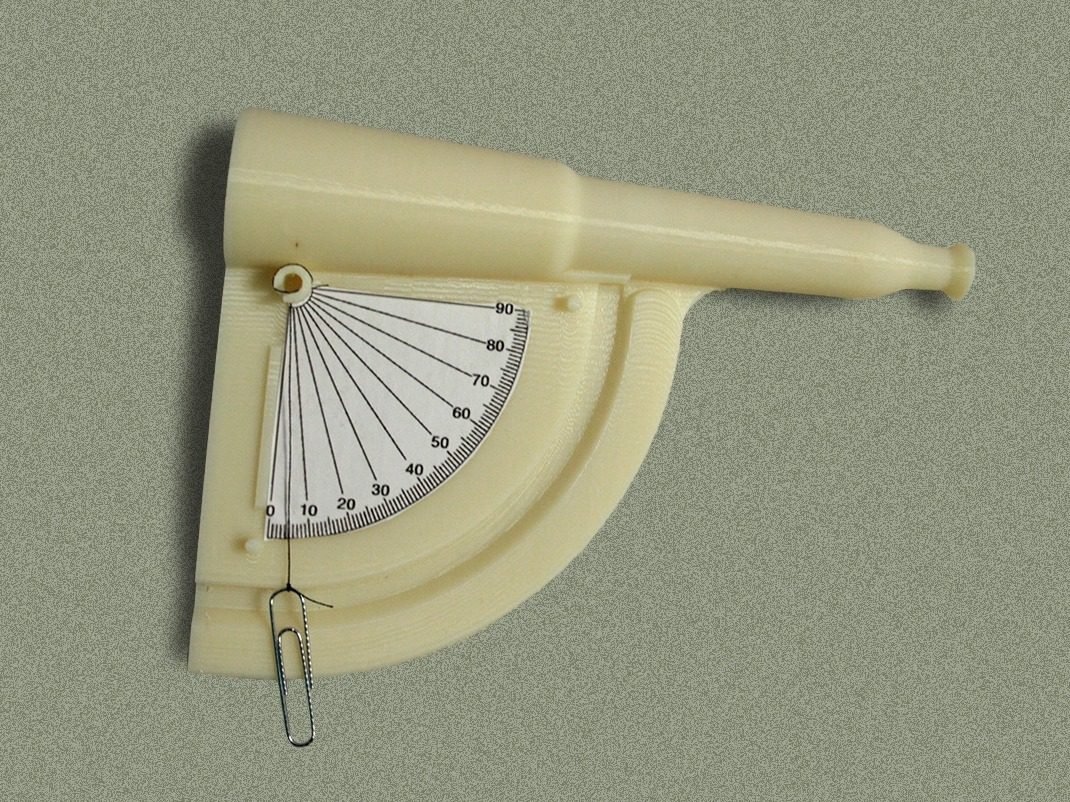
The clinometer is a versatile laboratory and field instrument used to measure angles of elevation, slope, and height. Known for its accuracy and durability, it is widely used in schools, colleges, and research institutions across India. Its simple design makes it ideal for teaching fundamental concepts in physics and geography while also supporting professional fieldwork.
Academic Use
In schools and universities, the clinometer is an essential tool for practical sessions in physics and geography. Students use it to measure building heights, slopes, and angles, bridging theoretical knowledge with real-world applications.
Industrial Use
Clinometers are applied in construction, surveying, and civil engineering projects for accurate slope analysis and alignment checks. Their reliability supports quality assurance in structural and design tasks.
Institutional Use
Geographic research centers, training institutes, and laboratories rely on clinometers for precise field measurements. They are indispensable for environmental studies, land surveys, and research experiments involving angular observation.
FAQs
What is a clinometer used for in education?
It is used to measure angles, slopes, and heights, helping students understand physics and geography concepts practically.
Is this clinometer suitable for field surveys?
Yes, it is commonly used in geographic fieldwork and surveying for slope and elevation measurements.
Can a clinometer be used in construction projects?
Yes, it is widely used in civil engineering and construction for angle and alignment analysis.
How do you operate a clinometer for height measurement?
By sighting the top of the object and noting the angle of elevation, height can be calculated using trigonometric methods.
What material is the clinometer made from?
It is usually made from durable metal or high-grade plastic with a calibrated scale for precise readings.