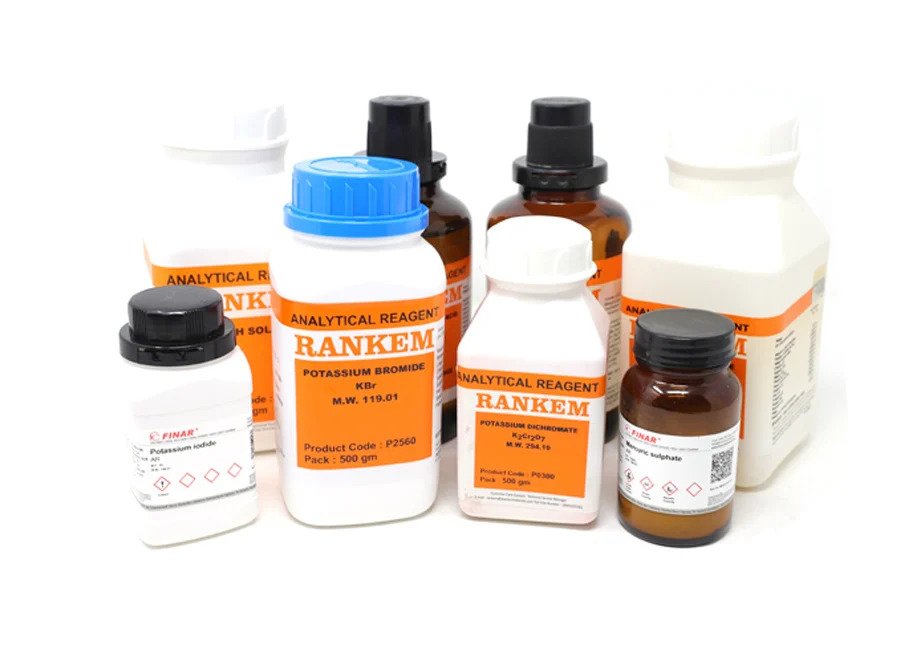
Description
Specifications Table
Product Name – COD standard, 20000 mg/L COD calibration standard
Quantity/Pack Size – 500 ml
Form – Liquid
Grade – Laboratory Grade
Application – Chemical Oxygen Demand (COD) testing
Product Overview
The 20000 mg/L COD calibration standard is a high-precision solution designed for accurate chemical oxygen demand (COD) testing in laboratory settings. This standard ensures reliable and reproducible results, making it essential for environmental monitoring, wastewater treatment analysis, and industrial process control. Formulated with laboratory-grade reagents, it adheres to strict quality standards, providing consistency in measurements. The liquid form allows for easy handling and precise dispensing, reducing the risk of contamination or errors. Its stability under standard lab conditions ensures long-term usability without degradation. Whether used in routine testing or critical research, this calibration standard delivers the accuracy required for compliance with regulatory standards. The 500 ml pack size offers an optimal balance between quantity and convenience, minimizing the need for frequent replenishment while maintaining freshness. Trusted by professionals, this COD standard is an indispensable tool for maintaining the integrity of analytical processes.
FAQs
1. What is the shelf life of this COD calibration standard?
The shelf life is typically 12 months from the date of manufacture when stored under recommended conditions.
2. Can this standard be used for both high and low-range COD testing?
This 20000 mg/L standard is optimized for high-range COD testing. For low-range applications, dilution may be required.
3. Is this calibration standard compatible with automated COD analyzers?
Yes, it is designed for compatibility with most automated COD analyzers, ensuring seamless integration into lab workflows.
4. How should this standard be stored to maintain its accuracy?
Store the standard in a cool, dry place away from direct sunlight and moisture, ideally at room temperature (15–25°C).
5. Are there any safety precautions to consider while handling this standard?
Wear appropriate personal protective equipment (PPE), such as gloves and goggles, and handle in a well-ventilated area to avoid exposure.