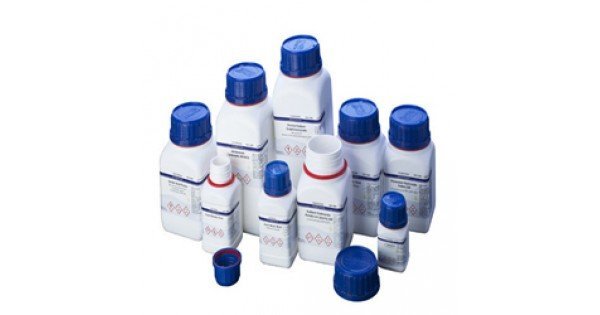
Description
Specifications Table
Product Name – CONDUCTIVITY STANDARD 100000 MICROSIEMENS/cm (µS/cm) TRACEABLE TO NIST
Quantity/Pack Size – 500 ML
Form – Liquid
Grade – Certified Reference Material (CRM)
Application – Calibration of conductivity meters, electrode testing
Product Overview
This NIST-traceable 100000 µS/cm conductivity standard is engineered for laboratories demanding uncompromising precision in conductivity measurements. Formulated with ultra-pure reagents and rigorously tested, it delivers consistent, reliable results for calibrating high-range conductivity meters and electrodes. The solution is stabilized to prevent drift over time, ensuring long-term accuracy even in frequent-use environments. Its certified reference material (CRM) grade guarantees compliance with international standards, making it indispensable for quality control, research, and industrial applications where exact conductivity values are critical. The 500 mL pack size offers an optimal balance between cost-efficiency and sufficient volume for repeated calibrations. Each batch undergoes multi-point verification against NIST standards, with documentation provided for full traceability. The solution’s low-temperature coefficient minimizes errors from ambient fluctuations, while its chemical stability resists contamination or degradation during storage. Whether used in routine lab maintenance or critical process validation, this standard eliminates guesswork by providing a verifiable benchmark for conductivity measurements up to 100000 µS/cm.
FAQs
1. What is the shelf life of this conductivity standard?
When stored unopened in its original container at room temperature (15–25°C), the standard remains stable for 24 months from the date of manufacture. Exposure to extreme temperatures or direct sunlight may reduce stability.
2. Can this standard be used with portable conductivity meters?
Yes, it is compatible with all laboratory-grade and portable conductivity meters that support high-range calibration (up to 100000 µS/cm). Always verify your meter’s specifications for upper-limit compatibility.
3. How does NIST traceability benefit my measurements?
NIST traceability ensures your calibration is linked to a nationally recognized standard, providing documented accuracy and defensibility for audits, research publications, or regulatory compliance.
4. What precautions should be taken during handling?
Use clean, dedicated pipettes or dispensing tools to avoid cross-contamination. Reseal the bottle tightly after each use to prevent evaporation or absorption of atmospheric CO₂, which can alter conductivity.
5. Is recalibration required after opening the bottle?
No, but best practices recommend using the standard within 3 months of opening for optimal accuracy. For critical applications, perform a verification check against a secondary standard if the bottle has been open for extended periods.