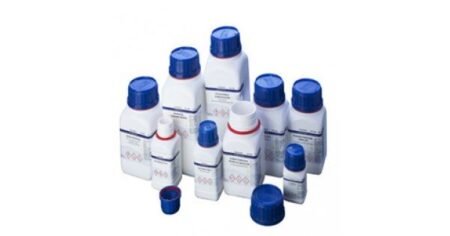
Description
Specifications Table
| Product Name | Conductivity Standard 147 µS/cm traceable to NIST | E0012 | Loba Chemie |
|---|---|
| Quantity/Pack Size | 500 ml |
| Form | Liquid solution |
| Grade | Analytical grade |
| Application | Calibration of conductivity meters, lab testing, quality control |
Product Description
When it comes to precise conductivity measurements in labs, accuracy is non-negotiable. The Conductivity Standard 147 µS/cm from Loba Chemie, traceable to NIST, is designed to deliver reliable calibration for your conductivity meters. Whether you’re a student, researcher, or educator, this solution ensures your equipment meets the highest standards of precision.
Conductivity standards are essential for verifying the performance of your lab instruments. This 147 µS/cm solution is formulated to provide consistent and traceable results, making it a trusted choice for educational institutions, research facilities, and industrial labs. With its NIST traceability, you can be confident in the integrity of your data every time you calibrate.
Using a high-quality conductivity standard like this one helps eliminate measurement errors, ensuring your experiments and tests are reproducible. The 500 ml pack size is ideal for frequent use, reducing the need for constant reordering while maintaining cost efficiency.
At eqipped, we understand the importance of reliable lab supplies. That’s why we offer this conductivity standard solution, sourced from Loba Chemie, a brand known for its commitment to quality and accuracy. Whether you’re setting up a new lab or maintaining an existing one, this product is a must-have for your calibration toolkit.
Ensure your conductivity meter is always accurate. Buy Conductivity Standard 147 µS/cm NIST traceable online today and experience precision you can trust.
Why Calibration Matters
Conductivity meters are sensitive instruments that can drift over time due to environmental factors, wear, or contamination. Regular calibration with a certified standard like this 147 µS/cm solution ensures your readings remain accurate. This is especially critical in applications where even minor deviations can impact results, such as environmental testing, pharmaceutical research, or educational experiments.
For students and educators, using a NIST-traceable standard reinforces best practices in lab work, teaching the importance of precision from the start. Researchers rely on these standards to validate their findings, ensuring their work meets publication and regulatory standards.
How to Use This Conductivity Standard
Calibrating your conductivity meter with this solution is straightforward. Begin by rinsing the probe with deionized water to remove any residues. Immerse the probe in the 147 µS/cm standard solution and follow your meter’s calibration instructions. Most modern meters will automatically adjust to the standard’s value, but always refer to your device’s manual for specific steps.
Store the solution in a cool, dry place, away from direct sunlight, to maintain its stability. Always use clean, dedicated containers to avoid contamination, which can affect the standard’s accuracy.
Applications of Conductivity Standard 147 µS/cm
This conductivity standard is versatile and suitable for a wide range of applications, including:
Educational labs: Teaching students about conductivity principles and proper calibration techniques.
Research facilities: Ensuring accurate measurements in experiments involving ionic solutions, water quality testing, or chemical analysis.
Industrial quality control: Verifying the performance of conductivity meters used in manufacturing processes, such as in pharmaceuticals, food and beverage, or wastewater treatment.
Environmental monitoring: Calibrating instruments used to test water purity, soil conductivity, or pollution levels.
No matter your field, this standard solution helps maintain the integrity of your data, giving you confidence in your results.
Choosing the Right Conductivity Standard
Selecting the appropriate conductivity standard depends on the range of your measurements. The 147 µS/cm standard is ideal for mid-range conductivity testing, commonly used in general lab applications. For higher or lower ranges, other standards may be required. Always check your meter’s specifications to determine the best calibration points.
At eqipped, we offer a variety of conductivity standards to meet different needs. If you’re unsure which standard is right for your application, our team is here to help you make the best choice.
Safety and Handling
While this conductivity standard is generally safe for lab use, it’s important to handle all chemical solutions with care. Wear appropriate personal protective equipment (PPE), such as gloves and goggles, when handling the solution. In case of spills, clean up immediately using absorbent materials and dispose of waste according to local regulations.
Always store the solution in its original container with the lid tightly sealed to prevent evaporation or contamination. Keep it out of reach of children and pets.
FAQs
What is a conductivity standard used for?
A conductivity standard is used to calibrate conductivity meters, ensuring they provide accurate readings. This is crucial for experiments, quality control, and research where precise measurements are required.
Why is NIST traceability important for conductivity standards?
NIST traceability ensures the standard’s accuracy is verified against national measurement standards, providing confidence in your calibration results. It’s essential for labs that require high precision and compliance with regulatory standards.
How often should I calibrate my conductivity meter?
The frequency of calibration depends on usage and environmental conditions. For frequent use, calibrate weekly or before critical measurements. For occasional use, monthly calibration is typically sufficient.
Can I use this conductivity standard for all types of meters?
This 147 µS/cm standard is suitable for most lab-grade conductivity meters. However, always check your meter’s specifications to ensure compatibility with the standard’s range.
How should I store the conductivity standard solution?
Store the solution in a cool, dry place, away from direct sunlight. Keep the container tightly sealed to prevent contamination or evaporation. Avoid storing near strong acids, bases, or other reactive chemicals.