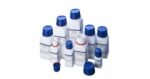
Description
Specifications Table
Product Name – CONDUCTIVITY STANDARD 3000 MICROSIEMENS/cm (µS/cm) TRACEABLE TO NIST 500 ML
Quantity/Pack Size – 500 ml
Form – Liquid
Grade – NIST Traceable
Application – Calibration of conductivity meters, lab instrument validation
Product Overview
This 3000 µS/cm conductivity standard is a high-precision solution designed for accurate calibration of conductivity meters and other lab instruments. Traceable to NIST (National Institute of Standards and Technology), it ensures reliable and consistent measurements, making it essential for maintaining instrument accuracy in research, quality control, and industrial applications. The solution is formulated with ultra-pure reagents to minimize impurities, providing stable conductivity values over time. Its long shelf life and resistance to contamination make it a cost-effective choice for frequent calibration needs. Whether used in educational labs, research facilities, or industrial settings, this standard delivers repeatable results, reducing measurement errors and improving data integrity. The 500 ml pack size offers an optimal balance between usability and storage efficiency, ensuring you have an adequate supply for regular calibration without excessive waste.
FAQs
1. What is the shelf life of this conductivity standard?
When stored properly in a tightly sealed container at room temperature, this standard remains stable for up to 24 months from the date of manufacture.
2. Can this standard be used for both benchtop and portable conductivity meters?
Yes, it is compatible with all types of conductivity meters, including benchtop, portable, and inline models, as long as they are designed for 3000 µS/cm calibration.
3. Is this standard affected by temperature fluctuations?
Conductivity values are temperature-dependent. For accurate results, ensure the standard and meter are at the same temperature, ideally within the recommended range of 20–25°C.
4. How should I dispose of expired or unused conductivity standard?
Follow local laboratory waste disposal guidelines. Typically, small quantities can be neutralized and disposed of as non-hazardous waste, but check with your institution’s safety protocols.
5. Does this standard require any special storage conditions?
Store in a cool, dry place away from direct sunlight and chemical vapors. Keep the bottle tightly closed to prevent contamination or evaporation.