Description
Specifications Table
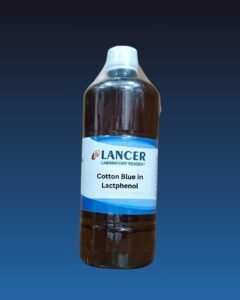
| Product Name | Cotton Blue in Lactophenol | 416 | Lancer |
|---|---|
| Pack Size | 125 ml |
| Form | Liquid solution |
| Grade | Laboratory grade |
| Application | Fungal microscopy staining |
Product Description
Cotton Blue in Lactophenol is a trusted reagent for staining fungal samples in microscopy. This solution combines cotton blue dye with lactophenol, a clearing agent that enhances visibility of fungal structures like hyphae, spores, and conidia. Widely used in mycology labs, educational institutions, and research facilities, it provides sharp contrast for accurate identification.
Whether you’re a student learning fungal morphology or a researcher documenting species, this lactophenol cotton blue solution ensures consistent, high-quality staining. The 125 ml pack size offers ample supply for routine lab work, making it a cost-effective choice for both small-scale and bulk applications.
At eqipped, we source this product from Lancer, a reputable brand known for reliable lab reagents. Each batch undergoes quality checks to meet stringent laboratory standards, so you can trust its performance in your experiments.
Need a dependable stain for fungal microscopy? Buy Cotton Blue in Lactophenol online today for precise, clear results every time.
How to Use Cotton Blue in Lactophenol
1. Prepare your fungal sample on a clean microscope slide.
2. Add a drop of Cotton Blue in Lactophenol solution to cover the specimen.
3. Place a coverslip gently to avoid air bubbles.
4. Observe under a compound microscope at 40x or higher magnification.
5. The cotton blue dye will stain fungal cell walls, while lactophenol clears the background for better contrast.
Key Features
This lactophenol cotton blue solution is formulated for optimal staining performance. The cotton blue dye binds selectively to fungal chitin, highlighting structural details. Lactophenol acts as a mounting medium, preventing sample degradation and improving clarity. Unlike temporary stains, this solution preserves specimens for extended observation.
For students and educators, it’s an essential tool for practical mycology sessions. Researchers rely on it for taxonomic studies and diagnostic work. The ready-to-use format eliminates the need for mixing, saving time in busy labs.
Safety and Storage
Store the bottle tightly sealed at room temperature, away from direct sunlight. Lactophenol contains phenol, which is hazardous if ingested or inhaled. Always use in a well-ventilated area with proper lab safety gear, including gloves and goggles. Dispose of waste solution according to local chemical disposal regulations.
Why This Product Stands Out
Many lab suppliers offer generic stains, but eqipped ensures you get a product backed by Lancer’s expertise. The balanced formulation prevents over-staining, which can obscure fine details. Its stability means consistent results across multiple uses, reducing variability in your work.
Upgrade your microscopy workflow with Cotton Blue in Lactophenol. Shop now for fast delivery across India.
FAQs
What is Cotton Blue in Lactophenol used for?
It’s primarily used to stain fungal samples for microscopy, helping visualize hyphae, spores, and other structures by binding to chitin in cell walls.
How long does the stain last on a slide?
The stain remains effective for several days if the slide is properly sealed. For long-term storage, refrigerate the prepared slide.
Can I use this for bacterial staining?
No, this solution is specific to fungal samples. For bacteria, use Gram stain or other appropriate dyes.
Is this product ready to use?
Yes, it comes pre-mixed and requires no dilution. Simply apply to your sample as directed.
What precautions should I take while handling?
Wear gloves and goggles, work in a fume hood if possible, and avoid skin contact. Phenol is toxic and can cause burns.