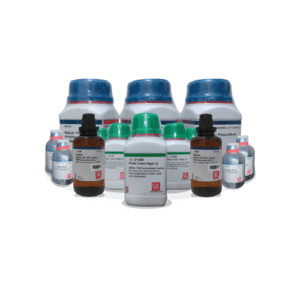
Description
Specifications Table
| Product Name | Cytochrome C (Oxidized) (Type 1) ex. Horse Heart extrapure, 90% |
|---|---|
| Pack Size | 25 Mg, 100 Mg, 500 Mg, 1 Gms |
| Form | Powder |
| Grade | Extrapure |
| Application | Biochemical research, electron transport studies, enzyme assays |
Product Description
Cytochrome C (Oxidized) is a highly purified protein derived from horse heart, widely used in biochemical and molecular biology research. With a purity of 90%, this extrapure grade ensures reliable results in electron transport chain studies, enzyme kinetics, and oxidative phosphorylation experiments. Researchers and educators trust this product for its consistency and high activity, making it a staple in labs across India.
Whether you’re studying mitochondrial function or developing diagnostic assays, this cytochrome C variant offers exceptional performance. Its oxidized form is particularly useful for experiments requiring controlled redox conditions. eqipped provides this product in multiple pack sizes to suit your research needs, ensuring you get the right quantity without excess waste.
Need cytochrome C for your next experiment? Buy online now and get lab-ready purity delivered to your doorstep.
This product is sourced from SRL Chem, a trusted name in laboratory chemicals, and is backed by rigorous quality control. The extrapure grade guarantees minimal impurities, making it ideal for sensitive applications where precision matters. From academic projects to advanced research, this cytochrome C variant is a dependable choice.
FAQs
What is the shelf life of cytochrome C (oxidized)?
When stored properly at -20°C, this product maintains stability for up to 2 years. Always check the expiration date on the packaging.
Can this be used for diagnostic applications?
Yes, its high purity makes it suitable for diagnostic kit development, though specific validation may be required for regulated applications.
What’s the difference between oxidized and reduced cytochrome C?
The oxidized form contains iron in the Fe³⁺ state, while the reduced form has Fe²⁺. This product is specifically the oxidized variant.
Is this product suitable for cell culture experiments?
While primarily used in biochemical assays, it can be used in cell culture studies, but proper sterilization protocols should be followed.
How should I reconstitute this product?
Dissolve in sterile water or appropriate buffer to the desired concentration. Avoid repeated freeze-thaw cycles.