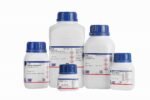
Description
Specifications Table
Product Name: – di-Potassium Hydrogen OrthoPhosphate
Quantity/Pack Size: – 500 gm
Form: – Powder
Grade: – HPLC & Spectroscopy
Application: – Chromatography, Spectroscopy
Product Overview
di-Potassium Hydrogen OrthoPhosphate is a high-purity reagent designed for use in analytical applications, particularly in High-Performance Liquid Chromatography (HPLC) and spectroscopy. This compound is formulated to meet stringent quality standards, ensuring reliable and accurate results in laboratory settings. Its high purity minimizes interference in analytical processes, making it an essential reagent for researchers and educators. The compound is manufactured under controlled conditions to maintain consistency in performance, ensuring reproducibility in experiments. Its chemical stability and precise composition make it suitable for a wide range of analytical techniques, including chromatography and spectroscopy. The product is packaged in a secure container to prevent contamination and degradation, preserving its integrity until use. Whether for academic research or professional laboratory work, this reagent provides the reliability and accuracy needed for precise analytical measurements.
FAQs
1. What is the primary use of di-Potassium Hydrogen OrthoPhosphate in laboratories?
It is primarily used in HPLC and spectroscopy for buffer preparation and as a mobile phase component due to its high purity and stability.
2. Is this product compatible with other analytical techniques besides HPLC?
Yes, it can also be used in spectroscopy, ion chromatography, and other analytical methods requiring high-purity reagents.
3. How should this reagent be stored to maintain its quality?
Store in a cool, dry place away from direct sunlight and moisture to prevent degradation and contamination.
4. Can this product be used in educational settings?
Yes, it is suitable for educational purposes, including student experiments and academic research.
5. What are the alternatives to di-Potassium Hydrogen OrthoPhosphate for similar applications?
Alternatives include other phosphate salts like monobasic potassium phosphate or dibasic potassium phosphate, depending on the specific application.