Description
Specifications Table
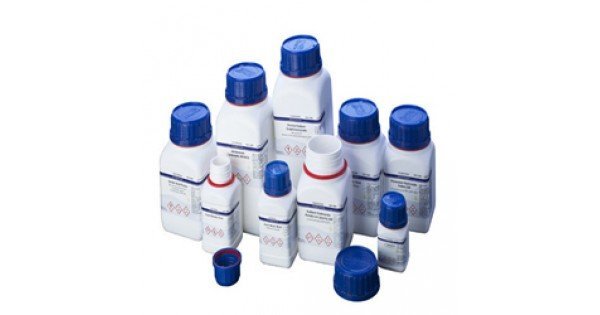
Product Name – DI-tert BUTYL PYROCARBONATE 98% For Synthesis Quantity/Pack Size – 100 ml, 500 ml Form – Liquid Grade – For Synthesis Application – Peptide synthesis, amino group protection
Product Overview
DI-tert Butyl Pyrocarbonate 98% is a high-purity reagent designed for synthesis applications, particularly in peptide chemistry and organic synthesis. This liquid-form compound is widely recognized for its efficiency in protecting amino groups during peptide synthesis, ensuring high yields and purity in final products. The reagent’s stability and reactivity make it a preferred choice for researchers and chemists working on complex molecular structures. Its 98% purity level guarantees minimal impurities, reducing the risk of side reactions and ensuring consistent results. The liquid form allows for precise measurement and easy integration into various laboratory protocols. Whether used in small-scale experiments or larger synthesis processes, this reagent maintains its integrity under standard lab conditions, providing reliable performance. Its compatibility with common organic solvents further enhances its versatility in diverse synthetic routes. For laboratories prioritizing accuracy and reproducibility, this DI-tert Butyl Pyrocarbonate offers an optimal balance of purity, stability, and ease of use.
FAQs
1. What is the shelf life of DI-tert Butyl Pyrocarbonate 98% when stored properly?
When stored in a cool, dry place away from moisture and direct sunlight, the reagent typically maintains its stability for up to 24 months from the date of manufacture. Always check the label for the exact expiration date.
2. Is this reagent compatible with common organic solvents like dichloromethane or DMF?
Yes, DI-tert Butyl Pyrocarbonate 98% is soluble in most organic solvents, including dichloromethane, DMF, and THF, making it suitable for a wide range of synthetic applications.
3. Can this product be used for large-scale synthesis, or is it limited to small-scale lab use?
The reagent is formulated for both small-scale and large-scale synthesis, though the 100 ml and 500 ml pack sizes are more commonly used in research and development settings.
4. Are there any special precautions for handling this chemical?
As with most synthesis-grade reagents, it is recommended to handle this product in a fume hood while wearing appropriate personal protective equipment, including gloves and goggles, to avoid skin and eye contact.
5. What alternatives exist if this specific grade is unavailable?
Alternatives may include other protecting agents like Fmoc-Cl or Cbz-Cl, though their reactivity and suitability depend on the specific synthesis requirements. Always verify compatibility with your protocol.