Description
Specifications Table
Product Material – High-grade metal and insulated components
Grade – Research/Industrial
Application – Dielectric constant measurement, electrical property testing
Product Overview
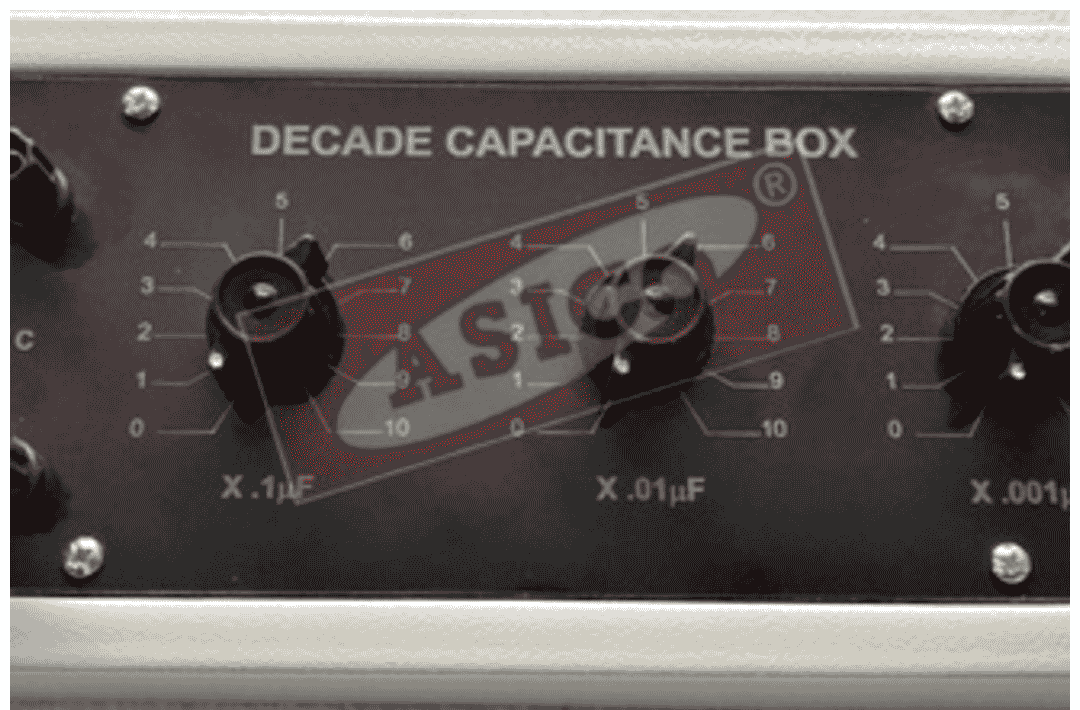
The Dielectric Constant Measurement by Deasuty Bridge is a complete, high-precision setup designed for accurate determination of dielectric properties in materials. This system employs the Deasuty Bridge method, a well-established technique for measuring capacitance and loss factor with exceptional accuracy. The setup includes a stable bridge circuit, precision capacitors, and a sensitive null detector, all engineered to minimize external interference and ensure repeatable results. The components are constructed from high-grade metals and insulated materials to maintain signal integrity and durability under continuous use. Ideal for applications requiring stringent electrical property analysis, this setup provides researchers with the tools needed to characterize insulators, semiconductors, and other dielectric materials. The system is calibrated for low-frequency measurements, making it particularly suitable for fundamental material research where dielectric behavior is critical. Its modular design allows for easy integration with additional instrumentation, while the intuitive layout simplifies operation for both experienced researchers and students. The complete setup eliminates the need for piecemeal assembly, ensuring compatibility between components and reducing experimental errors.
FAQs
1. What is the working principle behind the Deasuty Bridge method?
This method operates on the principle of balancing capacitive and resistive components in a bridge circuit to measure unknown capacitance by comparing it against known standards, with the null condition indicating precise measurement.
2. Can this setup measure both solid and liquid dielectric samples?
The setup is primarily designed for solid dielectric materials, but with appropriate sample holders and modifications, certain liquid dielectrics can also be tested if they remain stable during measurement.
3. What power supply is required for operating this equipment?
The system typically operates on standard laboratory AC power (220-240V, 50Hz), though some components may require low-voltage DC supply for signal processing.
4. How does temperature variation affect measurement accuracy?
Temperature fluctuations can alter dielectric properties and component behavior, so measurements should ideally be conducted in a temperature-controlled environment or with appropriate compensation techniques.
5. What maintenance is required to keep the setup functioning optimally?
Regular cleaning of contacts, periodic calibration of the bridge circuit, and proper storage in low-humidity conditions are essential to maintain accuracy and prevent component degradation over time.