Description
Specifications Table
Product Material – High-quality PCB with copper traces and precision resistors
Grade – Laboratory/Educational Grade
Application – Signal processing, embedded systems, electronics experiments
Product Overview
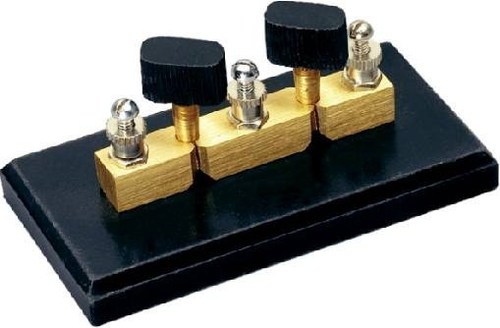
The Digital to Analog (D/A) Converter Using Weighted Register Network is a high-precision device designed for accurate digital-to-analog signal conversion in laboratory and educational settings. This converter employs a weighted resistor network to achieve precise voltage output proportional to the digital input, ensuring reliable performance in signal processing applications. Built with high-quality PCB and precision resistors, it offers stable and accurate conversions, making it ideal for embedded systems, electronics experiments, and other applications requiring analog signal generation. The device is engineered for durability and ease of use, featuring a compact design that integrates seamlessly into various experimental setups. Whether used for testing, prototyping, or educational demonstrations, this D/A converter delivers consistent results, making it a valuable tool for students, researchers, and educators working in electronics and signal processing fields.
FAQs
1. What is the resolution of this D/A converter?
The resolution depends on the number of bits used in the weighted register network. Typically, an 8-bit converter provides 256 discrete output levels.
2. Can this converter be used with microcontrollers?
Yes, this D/A converter can be interfaced with microcontrollers like Arduino, Raspberry Pi, or other development boards for signal generation.
3. What power supply is required for this D/A converter?
Most weighted register D/A converters operate on a 5V DC power supply, but always verify the specific requirements of your model.
4. How do I calibrate this D/A converter for accurate output?
Calibration involves adjusting the reference voltage and verifying output levels using a multimeter or oscilloscope. Follow the manufacturer’s guidelines for precise calibration.
5. Are there any alternatives to weighted register D/A converters?
Alternatives include R-2R ladder networks, PWM-based converters, and sigma-delta converters, each offering different trade-offs in resolution, speed, and complexity.