Description
Specifications Table
| Product Name | Diisopropylazodicarboxylate For Synthesis |
|---|---|
| Pack Size | 50 ML |
| Form | Liquid |
| Grade | For Synthesis |
| Application | Organic synthesis, Mitsunobu reactions, coupling agent |
Product Description
Diisopropylazodicarboxylate (DIAD) is a versatile reagent widely used in organic synthesis, particularly in the Mitsunobu reaction, where it facilitates the coupling of alcohols with nucleophiles. This high-purity compound is essential for researchers and chemists working on complex molecular constructions, offering reliable performance in various laboratory applications.
When you buy Diisopropylazodicarboxylate online from eqipped, you get a product that meets stringent quality standards, ensuring consistency in your experiments. Whether you’re a student, educator, or professional researcher, this reagent is a valuable addition to your lab supplies.
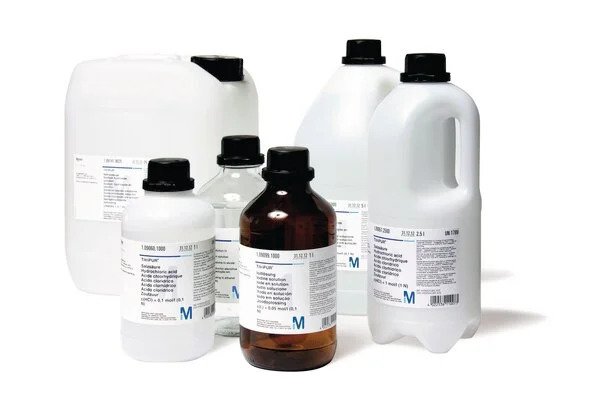
Looking for a trusted Diisopropylazodicarboxylate supplier? eqipped provides authentic Merck products with fast shipping across India.
The 50 ML pack size is ideal for both small-scale and bulk synthesis, making it a cost-effective choice for academic and industrial labs. Its stability and reactivity make it a preferred choice over alternatives like DEAD (Diethyl azodicarboxylate) in many applications.
For those searching for Diisopropylazodicarboxylate price or a reliable manufacturer, eqipped ensures competitive pricing without compromising on quality. Our platform simplifies the process of buying lab chemicals online, so you can focus on your research.
FAQs
What is Diisopropylazodicarboxylate used for?
It is primarily used in organic synthesis, especially in Mitsunobu reactions for coupling alcohols with nucleophiles.
Is DIAD safer than DEAD?
DIAD is often preferred over DEAD due to its lower volatility and reduced risk of explosive decomposition.
Can I buy Diisopropylazodicarboxylate in smaller quantities?
Yes, eqipped offers a 50 ML pack size, suitable for both small-scale and bulk synthesis needs.
How should I store DIAD?
Store in a cool, dry place away from heat and moisture. Keep the container tightly sealed.
Where can I find a reliable Diisopropylazodicarboxylate manufacturer?
eqipped sources authentic Merck products, ensuring high purity and reliability for your research.