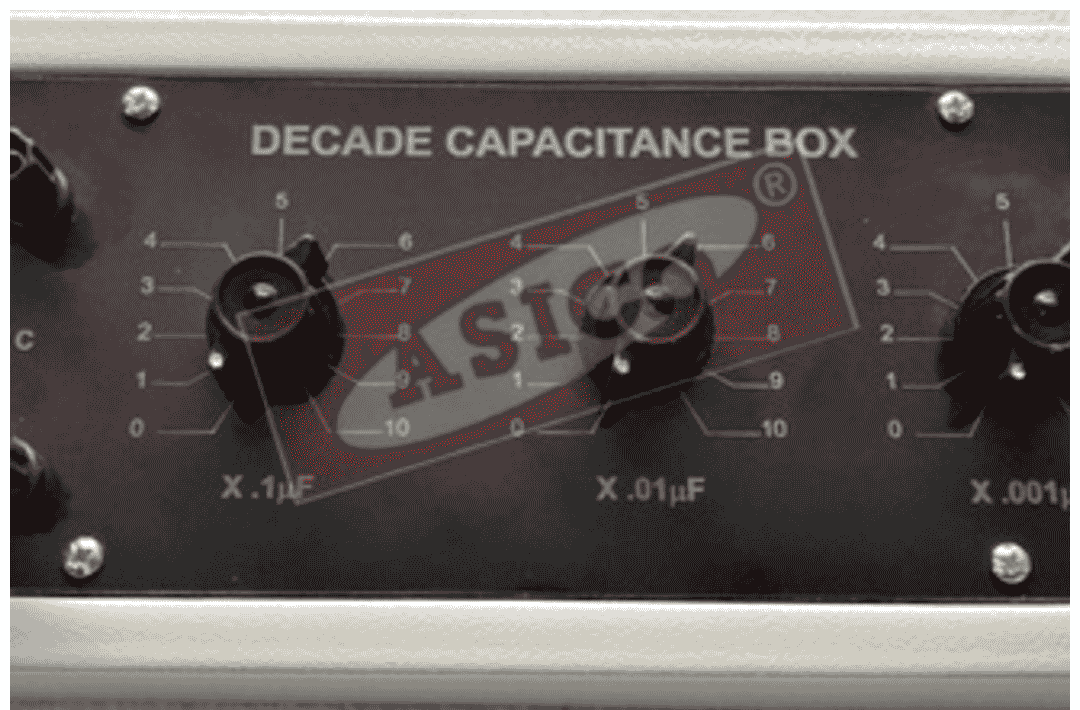
Description
Specifications Table
Product Material – High-grade ABS plastic with metal components
Product Size – Compact benchtop design (250mm x 200mm x 100mm)
Grade – Educational/Laboratory
Application – Circuit testing, analog electronics training, component analysis
Product Overview
The Discrete Component Trainer (Analog Component Trainer) is a meticulously engineered educational tool designed to facilitate hands-on learning in analog electronics. Built with high-grade ABS plastic housing and precision metal components, this trainer ensures durability and reliable performance in laboratory environments. The compact benchtop design (250mm x 200mm x 100mm) makes it ideal for space-constrained workstations while providing ample room for component placement and circuit experimentation. Engineered specifically for educational and laboratory use, this trainer supports a wide range of analog electronics applications, including circuit testing, component behavior analysis, and prototyping. The intuitive layout allows users to easily connect and test discrete components such as resistors, capacitors, diodes, and transistors without the need for soldering, making it perfect for both beginners and advanced learners. Each component is clearly labeled and organized for quick identification, reducing setup time and minimizing errors during experiments. The trainer’s robust construction ensures resistance to frequent handling, while its open design permits easy observation of circuit connections. Whether used for demonstrating fundamental electronic principles or conducting complex analog circuit experiments, this component trainer provides the versatility and reliability required in educational settings. The kit comes complete with all necessary connection points and test leads, allowing immediate use right out of the box.
FAQs
1. What types of components can be tested with this analog component trainer?
This trainer supports testing of passive components like resistors, capacitors, and inductors, as well as active components including diodes, transistors, and basic ICs. The breadboard-style layout allows for flexible configuration of various circuit designs.
2. Is this component trainer compatible with standard laboratory power supplies?
Yes, the trainer is designed to work with most standard DC power supplies (0-30V range) commonly found in electronics laboratories. It includes built-in protection features to prevent damage from voltage spikes or reverse polarity connections.
3. Are there any digital alternatives to this analog component trainer available?
While digital training systems exist, this analog component trainer offers distinct advantages for understanding fundamental circuit behavior. For mixed-signal applications, some users pair this with digital trainers, but the analog version remains essential for core electronics education.
4. What are the recommended storage conditions for this trainer kit?
Store the component trainer in a dry, dust-free environment at room temperature (15-30°C). Keep it away from direct sunlight and magnetic fields. When not in use, cover the unit or store it in its original packaging to prevent dust accumulation on the components.
5. How does this trainer differ from commercial-grade testing equipment?
Unlike commercial testing equipment designed for production environments, this educational trainer prioritizes learning accessibility. It features clearly labeled components, simplified connection points, and safety features specifically designed for classroom use, making complex concepts more approachable for students.