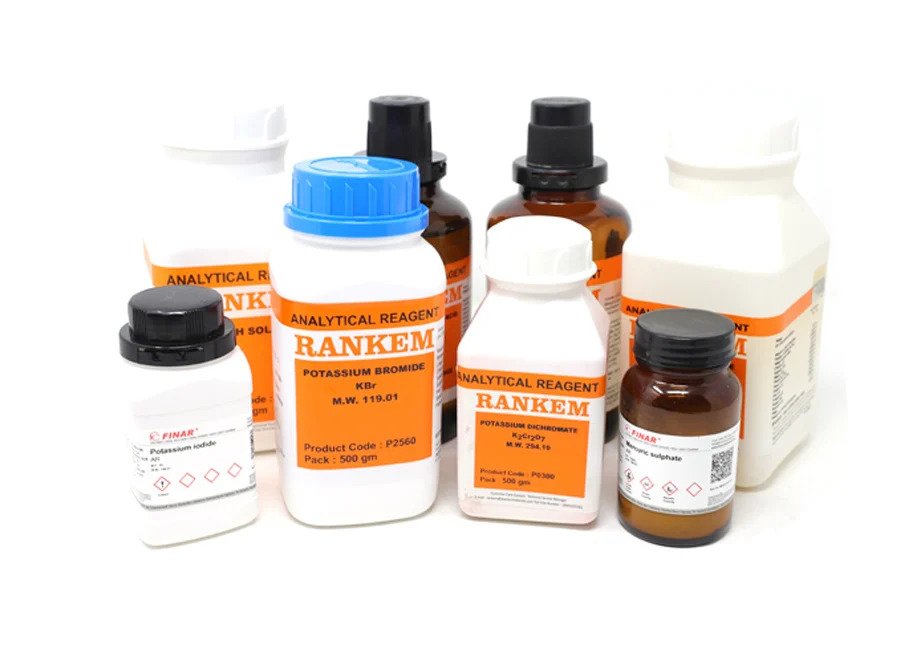
Description
Specifications Table
Product Name – Dodecane GPR RECTAPUR®
Quantity/Pack Size – 1 L
Form – Liquid
Grade – GPR (General Purpose Reagent)
Application – Chromatography, solvent extraction, calibration standards
Product Overview
Dodecane GPR RECTAPUR® is a high-purity aliphatic hydrocarbon solvent designed for demanding laboratory applications. With a molecular formula of C12H26, this colorless, odorless liquid offers exceptional chemical stability and low volatility, making it a reliable choice for precise analytical workflows. Its GPR (General Purpose Reagent) grade ensures minimal impurities, meeting stringent quality standards for consistent performance. The solvent’s non-polar nature and narrow boiling range (214–217°C) make it particularly effective in gas chromatography as a stationary phase modifier or calibration standard. Additionally, its low reactivity and high resistance to oxidation enhance its suitability for long-term storage without degradation. The RECTAPUR® designation guarantees adherence to strict manufacturing protocols, ensuring batch-to-batch reproducibility. Whether used as a dilution solvent, extraction medium, or reference material, Dodecane GPR RECTAPUR® delivers the purity and reliability required for accurate experimental results. Its compatibility with most organic solvents further expands its utility in multi-component systems. For laboratories prioritizing precision and reproducibility, this solvent provides an optimal balance of performance, purity, and practicality.
FAQs
1. What is the boiling point of Dodecane GPR RECTAPUR®?
The boiling point ranges between 214–217°C, making it suitable for high-temperature applications without premature evaporation.
2. Can this solvent be used with polar compounds?
Dodecane is non-polar, so it is not ideal for dissolving polar compounds but works well with non-polar or weakly polar substances.
3. How should Dodecane GPR RECTAPUR® be stored for long-term use?
Store in a tightly sealed container in a cool, dry place away from direct sunlight and ignition sources to prevent contamination or degradation.
4. Is this product compatible with standard laboratory glassware?
Yes, it is compatible with most borosilicate glass and PTFE-lined containers, but avoid prolonged contact with some plastics or rubber seals.
5. What alternatives exist if Dodecane is unavailable?
Alternatives like decane or tetradecane may be considered, though their properties (e.g., boiling point, viscosity) differ and may require protocol adjustments.