Description
Specifications Table
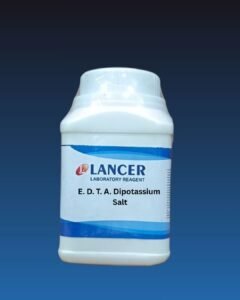
| Product Name | E. D. T. A. Dipotassium Salt | 601 | Lancer |
|---|---|
| Quantity/Pack Size | 100 gm |
| Form | Powder |
| Grade | Laboratory Grade |
| Application | Chelation, Titration, Molecular Biology |
Product Description
EDTA dipotassium salt is a versatile chelating agent widely used in laboratories for various applications. This high-purity compound from Lancer (Catalog No. 601) is essential for researchers, students, and educators working in biochemistry, analytical chemistry, and molecular biology.
The dipotassium form of EDTA offers excellent water solubility, making it ideal for preparing solutions in experimental protocols. Its strong metal-binding properties help prevent metal ion interference in enzymatic reactions and DNA/RNA experiments. Many research facilities rely on this compound for accurate titration processes and buffer preparations.
At eqipped, we understand the importance of quality reagents in scientific work. This laboratory grade EDTA dipotassium salt undergoes strict quality control to ensure consistent performance in your experiments. Whether you’re setting up a new lab or restocking essential chemicals, this 100g pack provides excellent value for regular use.
Need reliable chelating agents for your lab? Buy EDTA dipotassium salt online from eqipped for guaranteed purity and fast delivery.
Key Applications
This EDTA dipotassium salt finds extensive use in various laboratory applications. In molecular biology, it helps stabilize DNA and RNA by binding metal ions that could otherwise degrade nucleic acids. Analytical chemists use it as a titrant for water hardness testing and metal ion quantification.
Biochemists appreciate its role in enzyme assays where metal ions might interfere with reaction kinetics. The compound also serves as an anticoagulant in blood collection tubes and helps preserve tissue samples in histology laboratories. Its versatility makes it a staple in both academic and research settings.
Safety and Handling
While EDTA dipotassium salt is generally safe when handled properly, standard laboratory precautions should be followed. Always wear appropriate personal protective equipment including gloves and safety goggles when handling the powder. Store the container tightly sealed in a cool, dry place away from incompatible substances.
In case of skin contact, wash thoroughly with water. For eye contact, rinse immediately with plenty of water and seek medical advice. The compound is not classified as hazardous for transport, but proper laboratory hygiene should be maintained during use.
Why This Product Stands Out
The Lancer brand has built a reputation for consistent quality in laboratory chemicals. This particular batch of EDTA dipotassium salt offers several advantages for researchers. Its high purity level ensures reliable results in sensitive applications like PCR and DNA sequencing.
The fine powder form dissolves quickly in aqueous solutions, saving valuable lab time during preparation. The 100g packaging provides sufficient quantity for multiple experiments while maintaining freshness through proper sealing. Many users appreciate the clear labeling and batch-specific information that comes with each package.
Looking for laboratory grade EDTA dipotassium salt? Shop now at eqipped for authentic Lancer products with competitive pricing.
Storage Recommendations
To maintain the integrity of your EDTA dipotassium salt, store the unopened container at room temperature (15-25°C). After opening, keep the bottle tightly sealed to prevent moisture absorption. For long-term storage, consider using desiccants in the storage area.
Avoid exposing the compound to direct sunlight or high humidity. When stored properly, this product maintains its effectiveness for several years. Always check the container for any signs of moisture or caking before use, as these could indicate compromised quality.
Risk Note
While EDTA dipotassium salt is not classified as highly hazardous, it should be handled with standard laboratory precautions. The compound may cause mild skin and eye irritation. Inhalation of dust should be avoided. Always follow your institution’s chemical safety protocols when working with this substance.
FAQs
What is the molecular formula of EDTA dipotassium salt?
The molecular formula is C10H14K2N2O8, with a molecular weight of 372.41 g/mol. This dipotassium form has two potassium ions replacing two hydrogen ions from the EDTA molecule.
How do I prepare a 0.5M EDTA solution?
To prepare 100ml of 0.5M solution, dissolve 18.61g of EDTA dipotassium salt in about 80ml of distilled water. Adjust the pH to 8.0 with NaOH pellets or solution while stirring, then make up to 100ml with water.
Can I use this for DNA extraction?
Yes, this laboratory grade EDTA dipotassium salt is suitable for DNA extraction protocols. It helps prevent DNA degradation by chelating metal ions that could activate DNases. The typical concentration used is 1-5 mM in extraction buffers.
What’s the difference between disodium and dipotassium EDTA?
The main difference lies in their solubility and applications. Dipotassium EDTA is more soluble in water and often preferred for biological applications. Disodium EDTA is more commonly used in industrial applications and some pharmaceutical formulations.
Is this product suitable for food analysis?
While this is laboratory grade EDTA dipotassium salt, it’s not specifically certified for food analysis. For food testing applications, we recommend using food grade or analytical reagent grade EDTA products that meet specific regulatory standards.