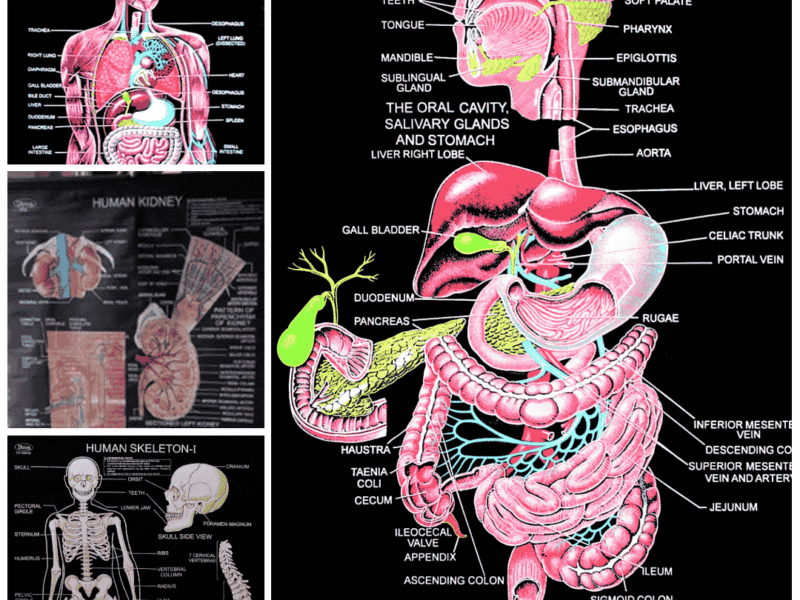
Description
Specifications Table
Product Material – Laminated Paper
Pack Size – Single Chart
Grade – Educational
Application – Biological Studies, Classroom Teaching
Product Overview
The EARTHWORM CIRCULATORY SYSTEM – ANNELIDA CHART is a meticulously designed educational tool that provides a clear and detailed visual representation of the earthworm’s circulatory anatomy. This chart is crafted to assist students, educators, and researchers in understanding the complex network of blood vessels and associated structures in annelids. The high-resolution illustrations are printed on durable laminated paper, ensuring longevity even with frequent use in classrooms or laboratories. The chart is an excellent reference for comparative anatomy studies, offering labeled diagrams that highlight key components such as the dorsal and ventral blood vessels, aortic arches, and capillary networks. Its educational-grade quality ensures accuracy and clarity, making it a reliable resource for biological education. The laminated surface also allows for easy cleaning, maintaining the chart’s pristine condition over time. Whether used for individual study or group instruction, this chart serves as an indispensable visual aid for mastering the intricacies of annelid circulatory systems.
FAQs
1. What material is the Annelida chart made of?
The chart is printed on high-quality laminated paper to ensure durability and resistance to wear and tear.
2. Is this chart suitable for classroom teaching?
Yes, the chart is specifically designed for educational purposes, making it ideal for classroom teaching and biological studies.
3. Can this chart be used for research purposes?
While primarily intended for educational use, the detailed anatomical illustrations can also support preliminary research and comparative studies.
4. How should I store the chart to maintain its quality?
Store the chart in a dry, cool place away from direct sunlight to prevent fading and ensure long-term durability.
5. Are there alternative charts available for other anatomical systems?
Yes, similar educational charts are available for various biological systems, including digestive and nervous systems of different organisms.