Description
Specifications Table
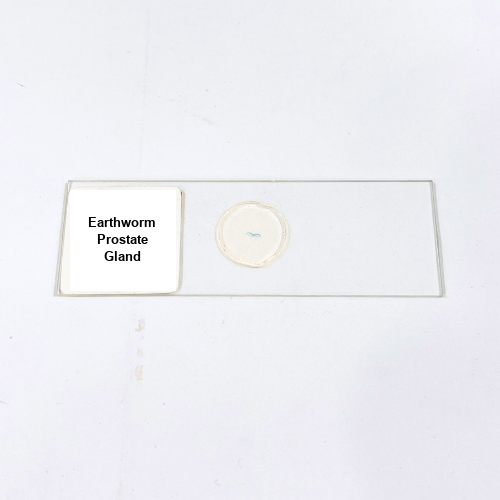
Product Name – Earthworm Prostate Gland
Quantity/Pack Size – 1 Slide
Form – Transverse Section
Grade – Laboratory Grade
Application – Observation of glandular tissue and microscopic study of reproductive system
Product Overview
The Earthworm Prostate Gland slide presents a meticulously prepared transverse section, showcasing the detailed structure of the reproductive gland. The specimen is carefully fixed and stained to highlight epithelial cells, glandular lobes, and connective tissue, preserving the intricate tissue organization for precise microscopic examination. The mounted slide ensures clarity and long-lasting durability, with consistent staining and minimal distortion for repeated observations. The preparation emphasizes the arrangement of glandular acini, ductal structures, and supporting connective fibers, allowing clear visualization of the tissue’s morphology. Laboratory-grade quality ensures that each slide meets strict standards for accurate anatomical representation and ease of handling. The slide is designed for high-resolution observation under various magnifications, providing researchers and students with a clear understanding of cellular architecture, tissue arrangement, and glandular morphology. Every slide undergoes rigorous quality control to maintain staining consistency, structural integrity, and microscopic clarity. Its durability and detailed preparation make it ideal for laboratory tissue analysis, supporting meticulous study of the reproductive gland and associated structures in invertebrates, facilitating reliable examination and analysis under professional laboratory conditions.
1. What features are visible on the Earthworm Prostate Gland slide?
Glandular lobes, epithelial cells, ductal structures, and connective tissue are clearly visible for detailed microscopic observation.
2. Is this slide compatible with standard laboratory microscopes?
Yes, it is designed for use with conventional optical microscopes for laboratory tissue examination and study.
3. Are there similar slides available for comparative reproductive system studies?
Yes, alternatives include Earthworm Seminal Vesicle, Earthworm Testis, and Earthworm Entire slides for comparative morphology.
4. How should the slide be stored to preserve quality?
Store in a dry, dust-free environment, away from direct sunlight and moisture, to maintain tissue integrity and staining quality.
5. Where are the specimens sourced from?
Specimens are obtained from certified laboratory suppliers and prepared under strict laboratory-grade standards for accuracy and reliability.