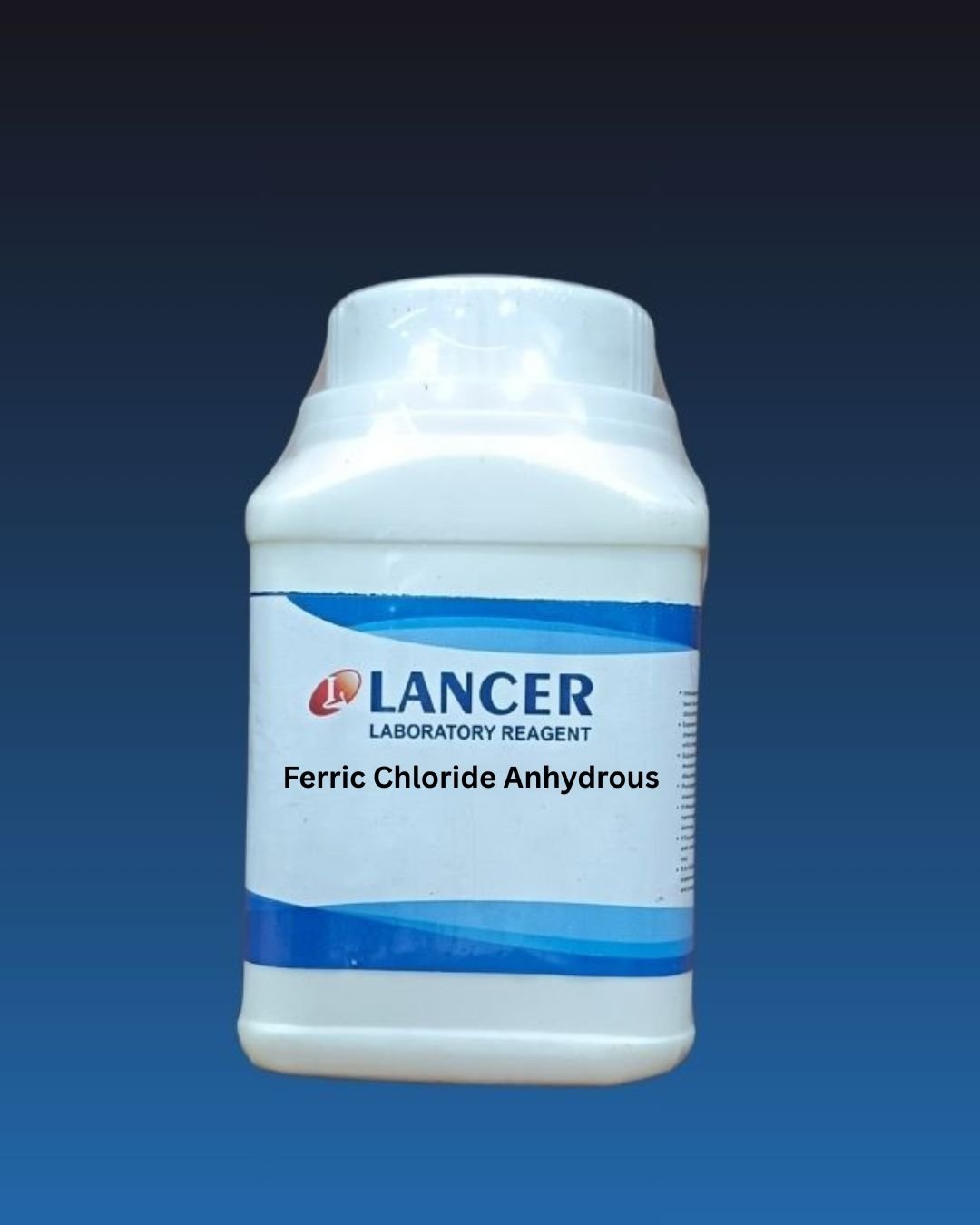
Description
Specifications Table
Product Name – Ferric Chloride Anhydrous
Quantity/Pack Size – 500 gm
Form – Powder
Grade – Laboratory Grade
Application – Chemical synthesis, etching, analytical reagent
Product Overview
Ferric Chloride Anhydrous is a versatile inorganic compound widely used in laboratories for its strong oxidizing and etching properties. This high-purity, laboratory-grade chemical appears as a yellow-brown crystalline powder and is highly soluble in water, forming a corrosive solution. It is commonly employed in chemical synthesis, particularly in the preparation of other iron compounds, and serves as a catalyst in various organic reactions. Due to its hygroscopic nature, it readily absorbs moisture from the air, requiring proper storage in airtight containers to maintain stability. In analytical chemistry, Ferric Chloride Anhydrous is used as a reagent for detecting phenols and as a coagulant in wastewater treatment. Its ability to etch copper and other metals makes it valuable in PCB manufacturing and metal surface treatment processes. The compound is also utilized in medical laboratories for certain diagnostic tests. When handling Ferric Chloride Anhydrous, appropriate safety measures should be followed, including the use of protective gloves and goggles, as it can cause skin irritation and is corrosive to metals. This product is sourced from reputable manufacturers to ensure consistent quality and reliability for research and industrial applications.
FAQs
1. What is the primary use of Ferric Chloride Anhydrous?
It is primarily used in chemical synthesis, etching processes, and as an analytical reagent in laboratories.
2. Is Ferric Chloride Anhydrous compatible with water?
Yes, it is highly soluble in water, forming a corrosive solution.
3. What are the storage requirements for this chemical?
Store in a cool, dry place in an airtight container to prevent moisture absorption.
4. Are there any alternatives to Ferric Chloride Anhydrous for etching?
Alternatives include Ferric Chloride Solution or Cupric Chloride, depending on the application.
5. What safety precautions should be taken when handling this product?
Wear protective gloves, goggles, and a lab coat to avoid skin contact and inhalation.