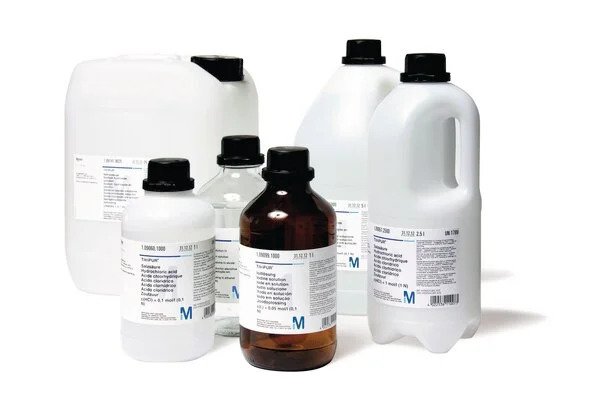
Description
Specifications Table
| Product Name | Fmoc-Lys(Biotin)-OH |
|---|---|
| Quantity/Pack Size | 500 MG |
| Form | Solid |
| Grade | Research Grade |
| Application | Peptide Synthesis, Biotinylation |
Product Description
Fmoc-Lys(Biotin)-OH is a specialized amino acid derivative widely used in peptide synthesis and biotinylation studies. This high-purity compound, sourced from Merck, ensures reliable results in biochemical research, protein labeling, and assay development. The Fmoc-protected lysine with biotin conjugation allows for precise control in solid-phase peptide synthesis, making it a preferred choice for researchers and educators.
Whether you’re working on protein interaction studies or developing diagnostic assays, this reagent provides the consistency and performance needed for accurate outcomes. Its compatibility with standard Fmoc chemistry protocols makes it easy to integrate into existing workflows.
Need high-quality peptide synthesis reagents? Buy Fmoc-Lys(Biotin)-OH online from eqipped for guaranteed purity and fast delivery.
The biotin tag in Fmoc-Lys(Biotin)-OH enables easy detection and purification using streptavidin-based systems, a critical feature in molecular biology and proteomics research. Researchers often use this compound to introduce biotin labels into peptides or proteins without compromising their biological activity.
For students and educators, this reagent serves as an excellent tool for teaching advanced peptide synthesis techniques. Its well-documented properties and consistent performance make it ideal for laboratory demonstrations and research projects.
FAQs
What is Fmoc-Lys(Biotin)-OH used for?
It’s primarily used in peptide synthesis to introduce biotin-labeled lysine residues, enabling detection and purification through streptavidin binding.
How should I store Fmoc-Lys(Biotin)-OH?
Store in a desiccator at -20°C for long-term stability. For short-term use, room temperature storage in a dry environment is acceptable.
Is this product suitable for educational purposes?
Yes, its consistent performance and well-documented properties make it excellent for teaching peptide chemistry in academic settings.
What’s the typical yield when using this reagent?
Yields are generally high (85-95%) when used in standard Fmoc peptide synthesis protocols with proper handling.
Can I use this for in vivo studies?
While primarily designed for in vitro applications, it can be used in certain in vivo studies with appropriate controls and ethical approvals.