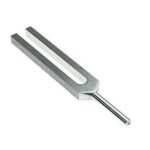
Description
Specifications Table
Product Name – Fork
Quantity/Pack Size – Single Piece
Form – Solid Metal Apparatus
Grade – Laboratory Grade
Application – Sound study, vibration experiments, resonance demonstrations
Product Overview
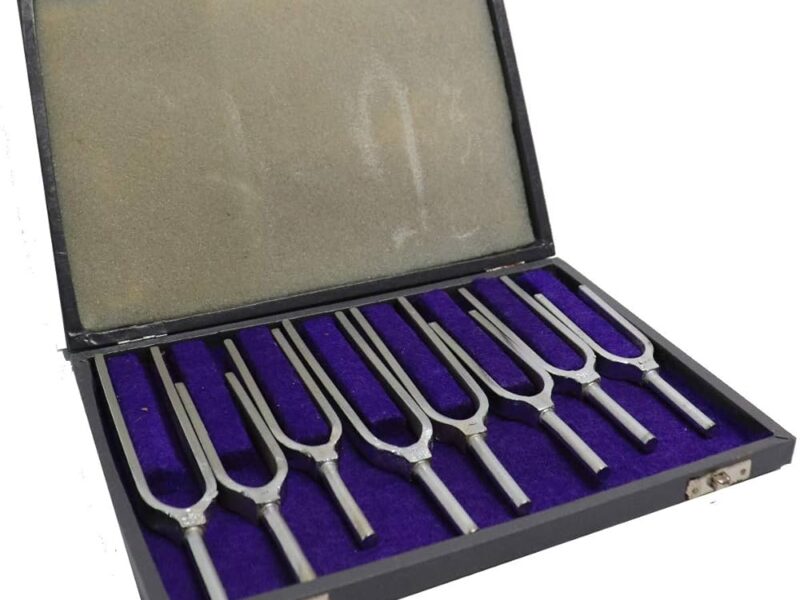
The fork is a versatile laboratory apparatus used in physics experiments to demonstrate sound, vibration, and resonance. When struck, it produces clear mechanical vibrations, helping students understand fundamental wave and frequency principles. With a durable design and precise construction, the fork is widely used in Indian schools, colleges, and research institutions as a reliable teaching tool in physics laboratories.
Academic Use
In schools and universities, forks are used in practical physics sessions to study sound waves, resonance, and frequency. Students learn the relationship between vibrations and pitch through direct experimentation.
Industrial Use
Although primarily academic, forks may also be applied in workshops and training centers to demonstrate basic principles of acoustics and mechanical vibrations.
Institutional Use
Research centers, science museums, and teacher training institutes employ forks in demonstrations of resonance, wave propagation, and sound experiments to make lessons engaging and interactive.
FAQs
What is the main use of a fork in labs?
It is used to study sound, resonance, and vibration in physics experiments.
Is this suitable for school and college experiments?
Yes, it is a standard accessory in physics laboratories for teaching sound and wave concepts.
How does the fork produce sound?
When struck, it vibrates at a particular frequency, producing a clear sound wave.
What is the difference between a fork and a tuning fork?
A fork is a general instrument for vibration experiments, while a tuning fork is specifically calibrated for acoustic frequency studies.
What material is the laboratory fork made of?
It is usually made of high-quality steel or alloy for durability and clear resonance.