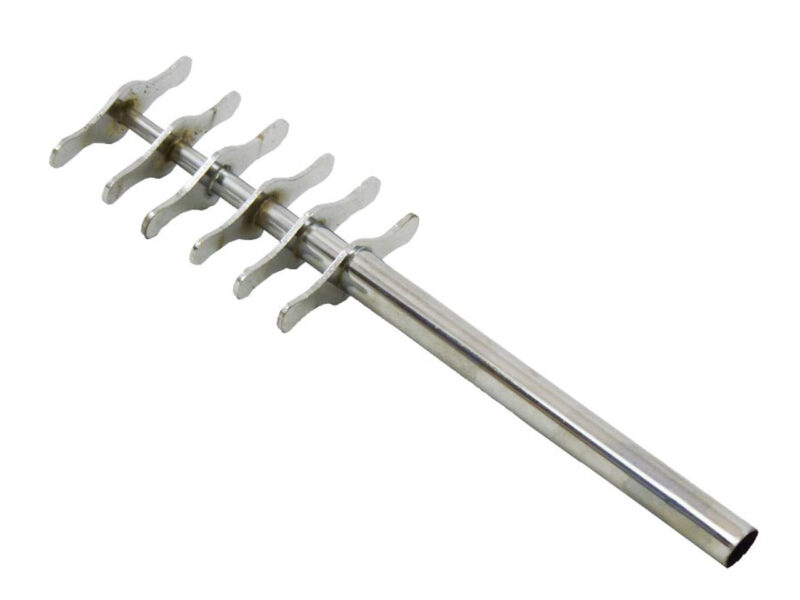
Description
Specifications Table
Product Material – High-conductivity copper probes with nickel plating
Grade – Research-grade (high precision)
Application – Semiconductor resistivity, thin-film measurements, bulk material testing
Product Overview
The Four Probe Method (Research Model) is an advanced resistivity measurement system engineered for high-precision material characterization in laboratory settings. Constructed with high-conductivity copper probes featuring durable nickel plating, this model ensures minimal contact resistance and superior signal integrity during testing. The research-grade design eliminates probe spacing errors through a collinear four-point configuration, delivering accurate resistivity readings across semiconductors, thin films, and bulk materials without surface preparation artifacts. The system’s robust construction resists corrosion and mechanical wear, maintaining calibration stability over extended use. Its versatile compatibility with standard lab power supplies and multimeters allows seamless integration into existing setups, while the ergonomic probe spacing accommodates samples of varying dimensions. Ideal for applications requiring NIST-traceable accuracy, this model adheres to ASTM F43-99 standards for resistivity measurements, making it a reliable choice for quality control, R&D, and academic research environments where repeatability and low measurement uncertainty are critical.
FAQs
1. What materials are compatible with this Four Probe Method model?
This model works with semiconductors, metals, conductive polymers, and thin films. Avoid highly insulating materials as they may require specialized configurations.
2. Can I use this with a standard digital multimeter for measurements?
Yes, the system is compatible with most digital multimeters and lab-grade power supplies, provided they meet the required sensitivity for microvolt-level readings.
3. How does this differ from industrial-grade Four Probe setups?
Research models prioritize precision with tighter probe alignment tolerances, higher-grade materials, and calibration stability, unlike industrial models designed for ruggedness and high-throughput testing.
4. What’s the recommended storage condition to maintain probe accuracy?
Store in a dry, dust-free environment with anti-static packaging. Avoid exposure to corrosive gases or humidity, which may degrade the nickel-plated probes over time.
5. Are there alternatives for measuring highly resistive samples?
For samples exceeding 10⁵ Ω·cm, consider van der Pauw configurations or specialized high-resistance meters, as standard four-probe setups may struggle with signal noise at extreme resistivities.