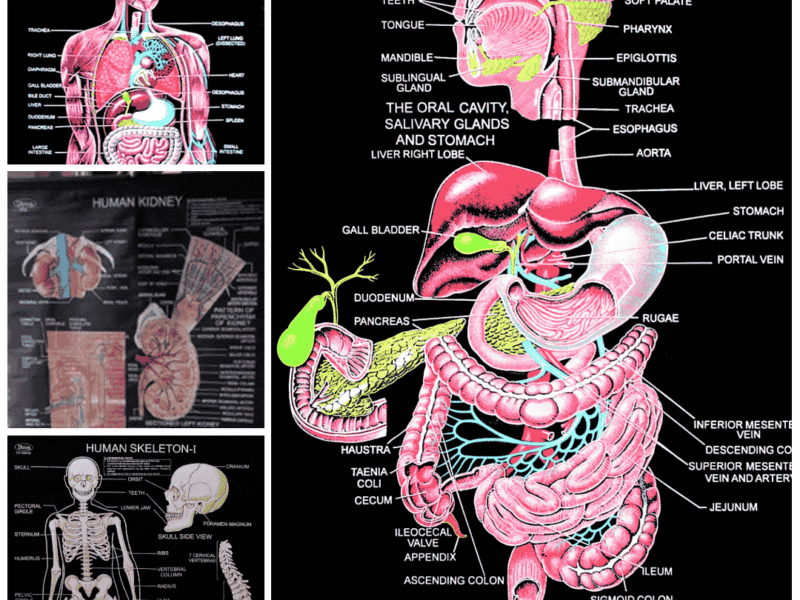
Description
Specifications Table
Product Material – Laminated paper for moisture resistance
Pack Size – Single chart
Grade – Educational/Laboratory
Application – Embryology research, comparative anatomy studies
Product Overview
This detailed FROG DEVELOPMENT -I EGG TO GASTRULATION – AMPHIBIA CHART provides a comprehensive visual representation of early amphibian embryology, focusing specifically on the critical stages from fertilization through gastrulation. The chart features high-resolution, color-accurate illustrations that clearly depict cellular division patterns, blastula formation, and the complex morphological changes during gastrulation. Printed on premium laminated paper, this chart resists moisture and wear, ensuring longevity in laboratory environments. The educational-grade visualization includes labeled anatomical structures with precise scientific terminology, making it an essential reference for developmental biology studies. The chart’s large format (standard educational poster size) allows for clear visibility of microscopic details that are often challenging to observe in live specimens. Each developmental stage is presented with proportional accuracy to maintain scientific integrity while simplifying complex biological processes for educational purposes. The material’s UV-resistant coating prevents fading from prolonged exposure to laboratory lighting conditions.
FAQs
1. What specific developmental stages does this amphibia chart cover?
This chart illustrates the complete sequence from fertilized egg through cleavage stages, blastula formation, and all phases of gastrulation in amphibian development.
2. Is this chart suitable for professional research applications?
While primarily designed for educational purposes, the chart’s scientific accuracy and detailed labeling make it valuable for preliminary research reference in comparative embryology studies.
3. What are the durability features of this laminated chart?
The chart features a moisture-resistant laminate coating that protects against humidity and accidental spills common in laboratory settings, with UV protection to prevent color fading.
4. How does this chart compare to digital alternatives for studying frog development?
Unlike digital resources, this physical chart provides constant visual reference without requiring electronic devices, allowing for simultaneous comparison with microscope observations during practical sessions.
5. What storage conditions are recommended for maintaining this chart?
Store flat in a dry environment away from direct sunlight when not in use. The laminated surface allows for occasional wiping with a damp cloth to remove dust or laboratory residues.