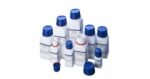
Description
Specifications Table
Product Name – GLUTARALDEHYDE 25% For Synthesis
Quantity/Pack Size – 500 ml, 2500 ml
Form – Liquid
Grade – For Synthesis
Application – Disinfection, Fixation, Cross-linking
Product Overview
Glutaraldehyde 25% for synthesis is a high-purity, versatile chemical widely used in laboratories for its strong disinfectant and fixative properties. This clear, colorless to pale yellow liquid is highly effective in cross-linking proteins, making it indispensable for various biochemical applications. Its broad-spectrum antimicrobial activity ensures reliable sterilization of laboratory equipment, while its ability to stabilize proteins and tissues makes it a preferred choice for fixation in microscopy and histology. The synthesis grade ensures minimal impurities, providing consistent and reproducible results in experiments. With a balanced formulation, this glutaraldehyde solution offers optimal reactivity without compromising safety when handled with proper precautions. Its stability under standard storage conditions further enhances its utility in long-term lab operations. Whether used for disinfection, tissue fixation, or protein cross-linking, this glutaraldehyde solution delivers unmatched performance, making it a staple in research and diagnostic laboratories.
FAQs
1. What is the shelf life of glutaraldehyde 25% for synthesis?
The shelf life is typically 24 months from the date of manufacture when stored in a cool, dry place in tightly sealed original containers.
2. Is this glutaraldehyde solution compatible with plastic containers?
Glutaraldehyde can degrade certain plastics over time. It is recommended to use glass or HDPE containers for storage and handling.
3. What are the storage conditions for glutaraldehyde 25%?
Store in a well-ventilated area, away from direct sunlight and heat sources, at temperatures between 15°C to 25°C.
4. Can this glutaraldehyde be used for electron microscopy?
Yes, it is commonly used as a fixative in electron microscopy due to its ability to preserve cellular structures effectively.
5. What precautions should be taken while handling glutaraldehyde?
Always wear appropriate personal protective equipment, including gloves, goggles, and lab coats, and handle in a fume hood to avoid inhalation.