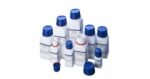
Description
Specifications Table
Product Name – GLYCOGEN For Biochemistry
Quantity/Pack Size – 5 g, 25 g
Form – Powder
Grade – Biochemistry Grade
Application – Enzymatic assays, molecular biology, research
Product Overview
GLYCOGEN For Biochemistry is a high-purity polysaccharide designed for precise laboratory applications. Derived from natural sources, this biochemistry-grade glycogen offers exceptional solubility in water, ensuring seamless integration into enzymatic assays, molecular biology protocols, and research workflows. Its consistent molecular structure and low impurity profile make it an ideal choice for experiments requiring reliable and reproducible results. The powder form allows for easy handling and accurate dosing, while its stability under standard lab conditions ensures long-term usability. Whether used as a substrate in enzymatic reactions or as a reference standard, this glycogen variant meets stringent quality benchmarks, making it a trusted component in biochemistry and molecular research. The product undergoes rigorous quality control to maintain batch-to-batch consistency, eliminating variability that could compromise experimental outcomes. Its compatibility with common lab buffers and reagents further enhances its versatility, allowing researchers to focus on their work without concerns about material performance.
FAQs
1. What is the solubility of this glycogen in water?
This glycogen dissolves readily in water, forming a clear to slightly opalescent solution depending on concentration.
2. Is this glycogen suitable for use in PCR applications?
While primarily used in enzymatic assays, it can serve as a carrier in nucleic acid precipitation protocols, but compatibility should be verified for specific PCR workflows.
3. How should this glycogen be stored for long-term use?
Store in a cool, dry place at room temperature, tightly sealed to prevent moisture absorption. Avoid freezing unless required by specific protocols.
4. Are there any known contaminants in this biochemistry-grade glycogen?
The product undergoes purification to minimize contaminants like proteins, DNA, and endotoxins, but residual traces may exist at negligible levels.
5. Can this glycogen be used as a substrate for amylase activity assays?
Yes, its consistent molecular structure makes it a reliable substrate for amylase and other carbohydrate-metabolizing enzyme assays.