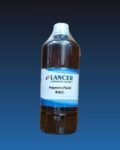
Description
Specifications Table
Product Name – Hayem’s Fluid R.B.C. 125 ml
Quantity/Pack Size – 125 ml
Form – Liquid
Grade – Laboratory Grade
Application – Red Blood Cell Analysis
Product Overview
Hayem’s Fluid R.B.C. is a specialized laboratory solution formulated to enhance the visibility and preservation of red blood cells during microscopic examination. This high-quality fluid is essential for accurate hematological studies, ensuring that red blood cells remain intact and clearly distinguishable under the microscope. The solution is prepared with precise concentrations of reagents to maintain cellular integrity and prevent hemolysis, making it a reliable choice for routine and diagnostic laboratory procedures. Its stability and consistency ensure reproducible results, which is critical for both research and clinical applications. The fluid is easy to use and compatible with standard laboratory protocols, providing a seamless integration into existing workflows. Whether used in educational settings or professional laboratories, Hayem’s Fluid R.B.C. delivers dependable performance, making it an indispensable tool for hematology studies.
FAQs
1. What is the primary application of Hayem’s Fluid R.B.C.?
Hayem’s Fluid R.B.C. is primarily used for the preservation and clear visualization of red blood cells during microscopic analysis.
2. Is this fluid compatible with automated hematology analyzers?
Yes, it is designed to be compatible with standard laboratory equipment, including automated hematology analyzers.
3. Are there any alternatives to Hayem’s Fluid R.B.C. for similar applications?
Alternatives may include other hematological stains or preservatives, but Hayem’s Fluid is specifically formulated for red blood cell analysis.
4. How should Hayem’s Fluid R.B.C. be stored for optimal shelf life?
It should be stored in a cool, dry place, away from direct sunlight, to maintain its efficacy and stability.
5. Can this fluid be used for long-term storage of blood samples?
While it is effective for short-term preservation, long-term storage may require additional preservatives or specific storage conditions.