Description
Specifications Table
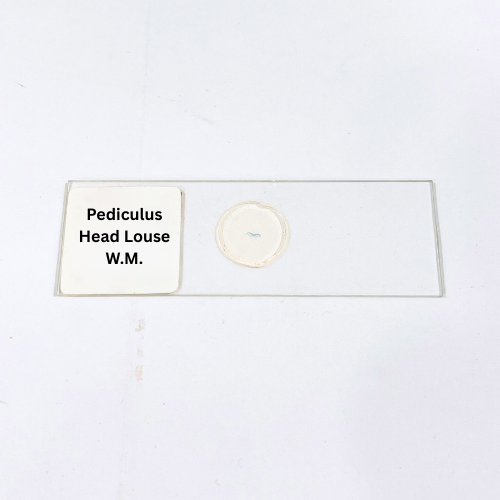
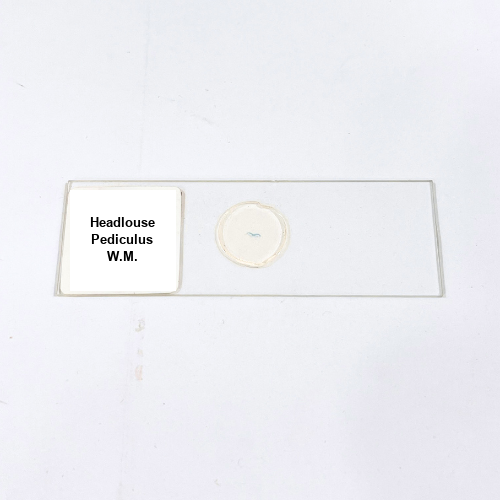
Product Name – Headlouse Pediculus W.M.
Quantity/Pack Size – Single Slide
Form – Whole Mount Slide
Grade – Laboratory Grade
Application – Insect Anatomy and Morphology Studies
Product Overview
The Headlouse Pediculus W.M. slide is meticulously prepared to showcase the intricate structures and features of the head louse. Using whole mount techniques, the specimen is mounted in a transparent medium that ensures maximum visibility and clarity when viewed through microscopes. The slide highlights essential details such as legs, claws, antennae, and body segmentation, making it ideal for close observation. The mounting medium stabilizes the sample, protecting it from dust, moisture, and potential damage during repeated handling. A coverslip is securely fixed to maintain the sample’s integrity, allowing prolonged usage without deterioration. The laboratory-grade preparation ensures consistency in quality and facilitates a clear view of the insect’s external anatomy. Designed to be compatible with most compound microscopes, the slide offers a user-friendly experience without compromising on detail. It is constructed to resist environmental factors, ensuring that the sample remains pristine over time. The Headlouse Pediculus W.M. slide is an essential tool for users who require a reliable, high-quality specimen for insect analysis. With its clear imaging, stability, and precision, it supports thorough examination and helps in understanding complex structures, making it a must-have in any laboratory or research environment focused on entomological studies.
1. What anatomical details can be observed in this slide?
The slide allows observation of legs, claws, antennae, and body segmentation in fine detail under a microscope.
2. Is this slide compatible with standard microscopes?
Yes, it is designed for use with most compound microscopes without requiring special adjustments or accessories.
3. Are there other insect slides available for comparison?
Yes, slides like Mosquito, Housefly, and Cockroach are available for similar morphological studies and comparisons.
4. How should the slide be stored for optimal condition?
It should be kept in a dry, dust-free environment away from direct sunlight and moisture to ensure long-lasting clarity.
5. How is the sample protected against external factors?
The sample is mounted in a medium that safeguards it from moisture, dust, and handling damage during use and storage.