Description
Specifications Table
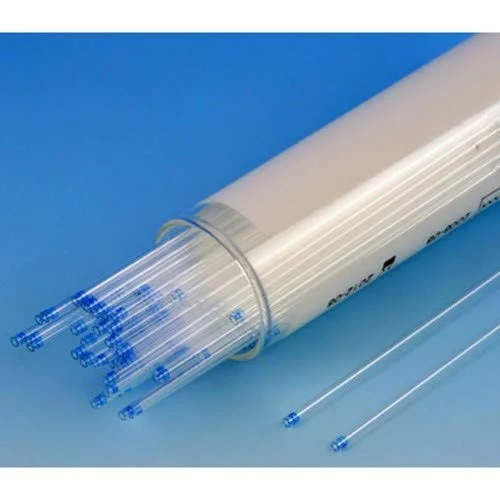
Product Name – Heparinised Capillary Tubes
Quantity/Pack Size – 100 Nos
Form – Tube, Capillary
Grade – Clinical/Lab Grade
Application – Blood Sampling, Haematocrit Determination
Product Overview
These high-quality heparinised capillary tubes are meticulously designed to meet the demanding requirements of various laboratory applications, particularly in haematology. Each tube measures precisely 75 mm in length with a 1 mm bore, ensuring consistent sample volume and reliable results. Internally coated with an optimal amount of anticoagulant heparin, these tubes prevent blood clotting immediately upon collection, making them indispensable for accurate microhaematocrit determinations and other critical blood sampling procedures. The uniform bore and smooth interior surface minimize erythrocyte damage and ensure a free flow of blood, leading to a homogenous mixture with the anticoagulant. Constructed from durable, high-clarity glass, these tubes allow for clear visualization of the sample, which is crucial for precise analysis. Their robust design prevents breakage during handling and centrifugation, offering a safe and efficient solution for laboratory professionals. With stringent quality control, these heparinised capillary tubes provide consistency and dependability, ensuring that researchers and students can achieve precise and reproducible data, which is paramount for scientific integrity and diagnostic accuracy.
FAQs
1. What are heparinised capillary tubes primarily used for?
Heparinised capillary tubes are primarily used for collecting small blood samples, particularly for microhaematocrit determination, which measures the volume percentage of red blood cells in blood.
2. How does heparinisation benefit blood sample collection?
Heparinisation prevents blood from clotting inside the tube by inhibiting the coagulation cascade. This ensures that the blood sample remains in its liquid state, allowing for accurate analysis without interference from clots.
3. What are the recommended storage conditions for these capillary tubes?
It is recommended to store heparinised capillary tubes in a cool, dry place, away from direct sunlight and extreme temperatures, to maintain their integrity and anticoagulant effectiveness.
4. Are there non-heparinised options available for specific applications?
Yes, non-heparinised capillary tubes are also available for applications where blood clotting is desired or when no anticoagulant is required, such as serum separation or certain diagnostic tests.
5. How can I ensure the accuracy and reliability of results using these tubes?
To ensure accuracy, always use tubes from a reputable supplier, handle them carefully to avoid contamination or damage, follow proper blood collection techniques, and adhere to manufacturer’s guidelines for centrifugation and analysis.