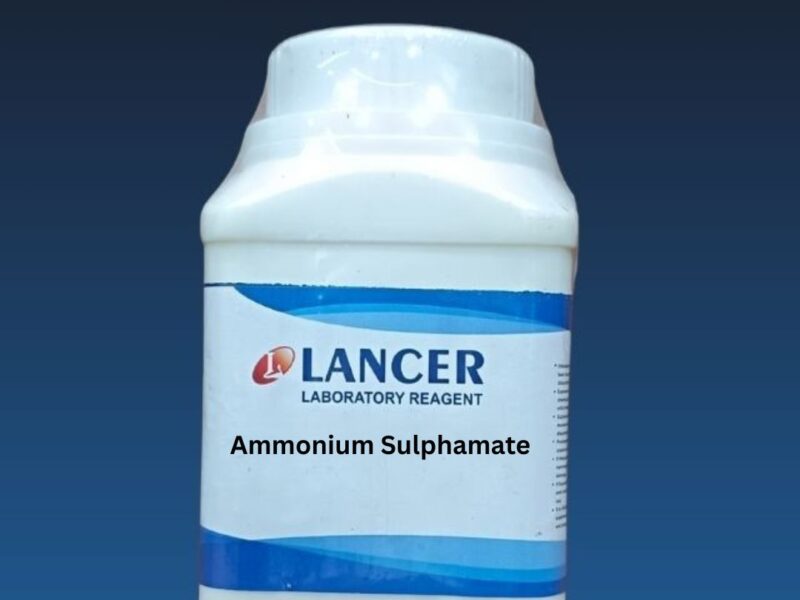
Description
Specifications Table
Product Name – Iron(III) chloride, anhydrous, 98%
Quantity/Pack Size – 10g, 100g, 1kg, 5kg, 25kg
Form – Solid (powder/crystals)
Grade – Laboratory reagent grade
Application – Chemical synthesis, etching, water treatment
Product Overview
Iron(III) chloride, anhydrous (FeCl₃), is a highly pure 98% reagent widely used in laboratory settings for its strong oxidizing and chlorinating capabilities. This dark brown to black crystalline solid is hygroscopic, readily absorbing moisture from the air, making it essential to store under dry conditions. Its high solubility in water and organic solvents like ethanol and acetone enhances its versatility in chemical reactions. The compound is particularly valued for its role in synthesis processes, where it acts as a Lewis acid catalyst, facilitating reactions such as Friedel-Crafts alkylations and acylations. Additionally, its ability to form complexes with various organic compounds makes it a critical reagent in qualitative analysis. The anhydrous form ensures minimal water content, providing consistent and reliable results in sensitive applications. Proper handling is advised due to its corrosive nature, which can cause irritation upon contact with skin or eyes. This reagent is a staple in labs requiring precise and reproducible chemical transformations.
FAQs
1. What is the difference between anhydrous and hydrated iron(III) chloride?
Anhydrous iron(III) chloride contains no water molecules, while the hydrated form has crystalline water. The anhydrous version is more reactive and preferred for moisture-sensitive applications.
2. Can this be used for PCB etching?
Yes, iron(III) chloride is commonly used for etching printed circuit boards (PCBs) due to its ability to dissolve copper efficiently.
3. Is this compound compatible with glassware?
While it can be stored in glass containers, prolonged exposure may cause slight corrosion. Use borosilicate glass for better resistance.
4. What precautions should be taken during storage?
Store in a tightly sealed container in a cool, dry place, away from moisture and incompatible substances like strong bases or oxidizing agents.
5. Are there any alternatives for similar applications?
For some reactions, aluminum chloride or zinc chloride can be alternatives, but they may not offer the same reactivity or selectivity.