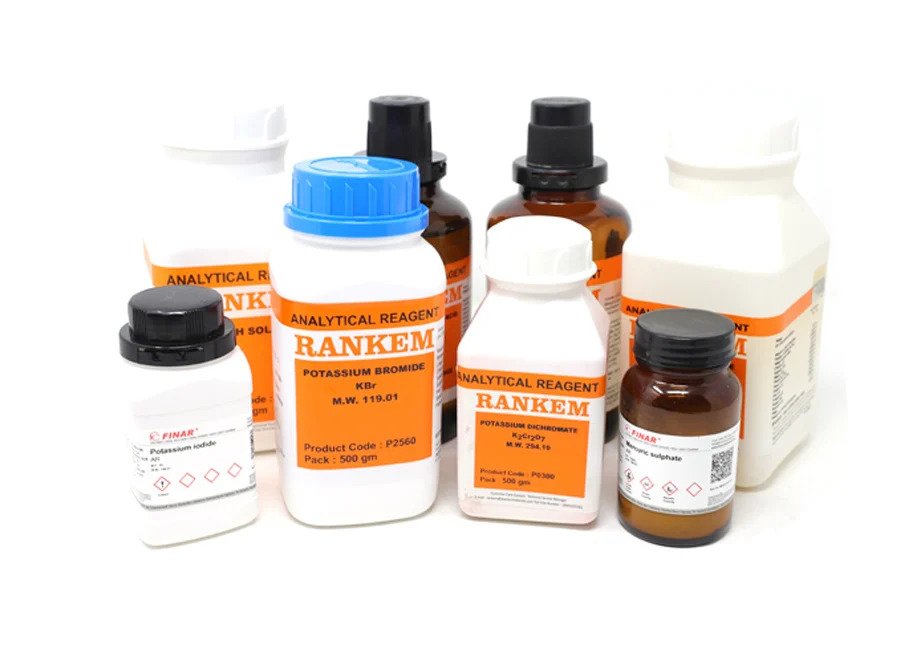
Description
Specifications Table
Product Name – L-Cysteine hydrochloride, monohydrate (biochemistry) LR
Quantity/Pack Size – 25 g
Form – White crystalline powder
Grade – LR (Laboratory Reagent)
Application – Biochemistry, protein research, reducing agent
Product Overview
L-Cysteine hydrochloride, monohydrate LR grade is a highly purified amino acid derivative widely used in biochemistry and molecular biology applications. This white crystalline powder is water-soluble and acts as a potent reducing agent, making it essential for protein research, disulfide bond reduction, and peptide synthesis. The LR (Laboratory Reagent) grade ensures high purity and consistency, meeting the stringent requirements of laboratory experiments. Its stable chemical structure and reliable performance make it a preferred choice for researchers and scientists working on sensitive biochemical assays. The monohydrate form provides enhanced solubility and stability, ensuring accurate results in critical applications. Whether used in buffer preparation, protein modification, or enzymatic reactions, this product delivers consistent quality and reproducibility, making it a staple in modern laboratories.
FAQs
1. What is the solubility of L-Cysteine hydrochloride monohydrate?
L-Cysteine hydrochloride monohydrate is highly soluble in water, forming a clear solution at standard laboratory conditions.
2. Is this product suitable for cell culture applications?
While primarily used in biochemistry, this LR grade product can be used in cell culture media preparation after proper sterilization and validation.
3. How should I store this chemical to maintain its stability?
Store in a cool, dry place away from direct sunlight and moisture, preferably in an airtight container to prevent oxidation.
4. What is the difference between LR grade and AR grade for this product?
LR (Laboratory Reagent) grade is suitable for general laboratory use, while AR (Analytical Reagent) grade offers higher purity for analytical applications.
5. Can this product be used for disulfide bond reduction?
Yes, L-Cysteine hydrochloride is commonly used as a reducing agent for breaking disulfide bonds in proteins and peptides.