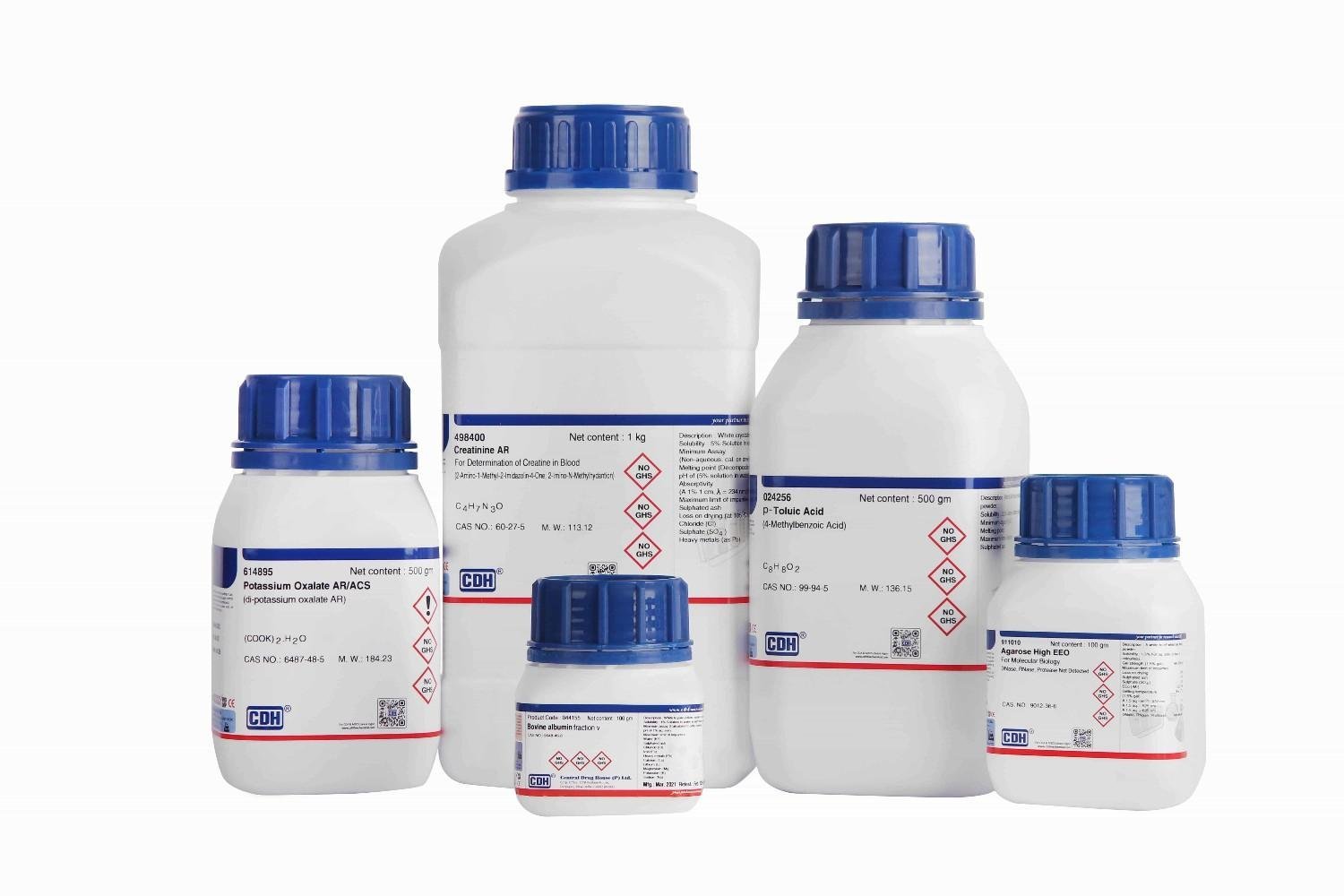
Description
Specifications Table
| Product Name | L-Glutamate Dehydrogenase (GLDH) ex. Bovine Liver 290U/mg | 105305 | CDH |
|---|---|
| Pack Size | 100 mg |
| Form | Lyophilized powder |
| Grade | Research grade |
| Application | Biochemical assays, metabolic research, enzymatic studies |
Product Description
L-Glutamate Dehydrogenase (GLDH) is a crucial enzyme in amino acid metabolism, catalyzing the reversible conversion of L-glutamate to α-ketoglutarate. Sourced from bovine liver, this high-purity GLDH preparation offers 290U/mg activity, making it an excellent choice for researchers studying nitrogen metabolism, ammonia detoxification, and cellular energy pathways.
Whether you’re conducting enzymatic assays, metabolic profiling, or biochemical research, this GLDH enzyme provides consistent performance and reliability. Its lyophilized form ensures stability during storage and transportation, while the research-grade purity guarantees accurate results in your experiments.
For laboratories and educational institutions across India, eqipped offers this premium GLDH enzyme with fast shipping and competitive pricing. Need high-quality GLDH for your research? Order now and experience seamless delivery to your lab.
Key Applications
This L-Glutamate Dehydrogenase enzyme is widely used in:
- Biochemical research on amino acid metabolism
- Enzymatic assays for glutamate quantification
- Studies on ammonia detoxification pathways
- Metabolic profiling in cellular systems
- Educational demonstrations in biochemistry labs
Storage and Handling
To maintain enzyme activity, store the lyophilized powder at -20°C. Once reconstituted, aliquot and store at -20°C for short-term use or -80°C for long-term storage. Avoid repeated freeze-thaw cycles to preserve enzyme integrity.
Why This GLDH Enzyme Stands Out
What makes this bovine liver GLDH special? It’s not just about the 290U/mg activity—it’s the consistency. Every batch undergoes rigorous quality control to ensure lot-to-lot uniformity, so your research results remain reproducible. The enzyme’s high specificity for L-glutamate makes it ideal for precise biochemical investigations.
For students and researchers in India looking to buy L-Glutamate Dehydrogenase online, eqipped provides a trusted source with transparent specifications and reliable delivery. Ready to elevate your research? Shop now for premium GLDH enzyme at competitive prices.
Safety Information
This product is for research use only. Not intended for diagnostic or therapeutic applications. Handle with standard laboratory precautions. Wear appropriate PPE and follow your institution’s biosafety guidelines.
FAQs
What is the optimal pH for L-Glutamate Dehydrogenase activity?
The enzyme shows maximum activity around pH 7.5-8.0, though this may vary slightly depending on your assay conditions.
Can this GLDH enzyme be used for clinical diagnostics?
No, this preparation is strictly for research purposes and not approved for diagnostic use.
How should I reconstitute the lyophilized GLDH?
Gently reconstitute in cold buffer (e.g., 50 mM Tris-HCl, pH 7.5) to the desired concentration. Avoid vigorous mixing.
What’s the shelf life of this GLDH enzyme?
When stored properly at -20°C, the lyophilized powder remains stable for 12 months from the date of manufacture.
Does eqipped offer bulk discounts on GLDH enzyme?
Yes, we provide competitive pricing for bulk orders. Contact our sales team for customized quotes.