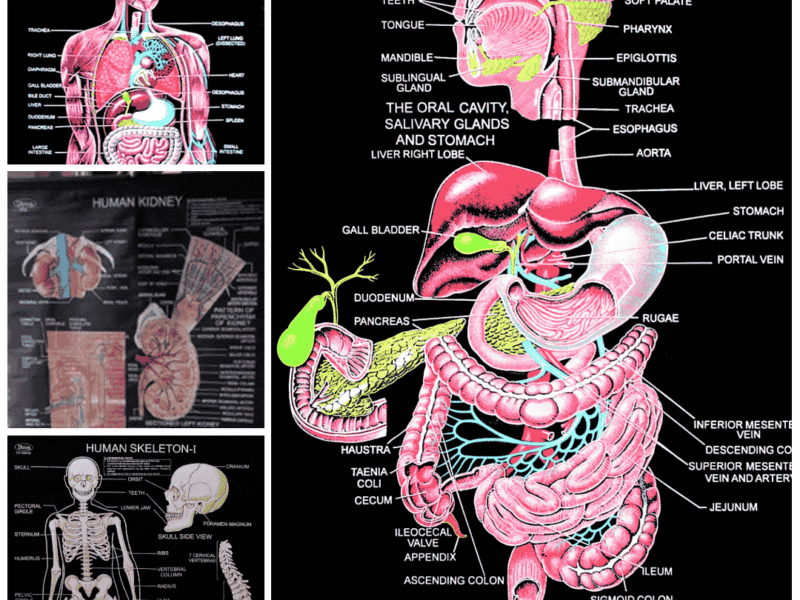
Description
Specifications Table
Product Material – Laminated high-grade paper with waterproof coating Pack Size – Single chart Grade – Laboratory/educational Application – Comparative anatomy, zoology labs, nervous system studies
Product Overview
The LABEO ROHITA CRANIAL NERVOUS – PISCES CHART is a meticulously designed anatomical reference tool tailored for advanced zoological and comparative anatomy studies. This lab-grade chart provides a highly detailed visualization of the cranial nervous system in Labeo rohita (Rohu fish), a key model organism in piscine research. The chart is printed on premium laminated paper with a waterproof coating, ensuring durability against accidental spills and frequent handling in laboratory environments. Each neural pathway, cranial nerve, and associated structure is labeled with scientific precision, adhering to standard anatomical nomenclature for academic consistency. The high-resolution illustrations maintain accurate proportions and spatial relationships, making it an indispensable resource for dissections, comparative studies, or theoretical analysis. Unlike generic fish anatomy charts, this specialized reference focuses exclusively on the cranial nervous system, offering depth that generic ichthyology charts lack. The chart’s design prioritizes clarity without sacrificing detail—critical for distinguishing between fine structures like the vagus nerve branches or trigeminal nerve distributions. Its portable single-sheet format allows for easy integration into lab setups, fieldwork, or classroom demonstrations. Whether used as a primary dissection guide or a supplementary reference, this chart bridges the gap between textbook diagrams and hands-on anatomical exploration, catering to both students and researchers who demand precision in piscine neuroanatomy.
FAQs
1. What type of lamination is used on this Labeo Rohita nervous system chart?
The chart features a matte-finish lamination with a waterproof coating to prevent damage from moisture or chemical exposure in lab settings. The material resists curling and can be wiped clean with a damp cloth.
2. Can this chart be used for comparative studies with other fish species?
While designed specifically for Labeo rohita, the cranial nervous system structures depicted follow general teleost anatomy patterns. It can serve as a baseline for comparative analysis, though species-specific variations should be cross-referenced with additional resources.
3. Are the nerve pathways color-coded for easier identification?
The chart employs a strategic color scheme where major cranial nerves are highlighted in distinct colors (e.g., red for motor nerves, blue for sensory), while supporting structures use neutral tones. This aids in quick visual differentiation during study or dissection.
4. How does this chart differ from digital anatomy software for fish nervous systems?
Unlike digital tools, this physical chart provides an uninterrupted, high-resolution reference without screen glare or software dependencies. It’s ideal for hands-on labs where electronic devices may not be practical or permitted.
5. What’s the ideal storage condition to prolong the chart’s lifespan?
Store the chart flat in a cool, dry environment away from direct sunlight. Avoid folding or rolling to prevent creases. For long-term storage, place it between acid-free boards or in a protective portfolio sleeve.