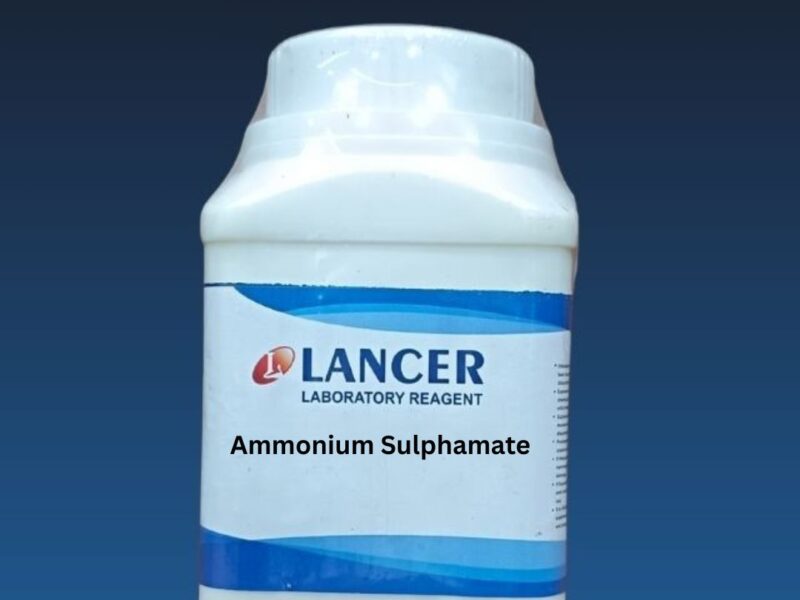
Description
Specifications Table
Product Name – Lithium Fluoride, 98.5%
Quantity/Pack Size – 1kg, 250g, 50g
Form – Crystalline Powder
Grade – 98.5% Pure
Application – Optical Coatings, Electrochemistry, Spectroscopy
Product Overview
Lithium Fluoride (LiF) is a high-purity, chemically stable compound widely used in scientific and industrial applications. With a purity of 98.5%, this crystalline powder offers excellent transparency in the ultraviolet (UV) to infrared (IR) range, making it a preferred material for optical coatings, lenses, and prisms. Its low refractive index and high thermal stability further enhance its utility in spectroscopy, laser systems, and radiation detection. The compound is also valued in electrochemistry for its ionic conductivity and as a flux in metallurgical processes. Due to its hygroscopic nature, proper storage in a dry, airtight container is recommended to maintain its integrity. Whether for research, development, or specialized manufacturing, this grade of Lithium Fluoride ensures reliable performance in demanding laboratory environments.
FAQs
1. What is the primary use of Lithium Fluoride in laboratories?
Lithium Fluoride is commonly used in optical applications like UV-transparent windows, prisms, and as a flux in metallurgy due to its high thermal stability.
2. Is this grade of Lithium Fluoride suitable for electrochemical experiments?
Yes, the 98.5% purity makes it suitable for electrochemical studies, particularly in battery research and ionic conductivity tests.
3. How should Lithium Fluoride be stored to prevent degradation?
Store in a cool, dry place in an airtight container to avoid moisture absorption, which can affect its properties.
4. Are there any safety precautions when handling Lithium Fluoride?
Wear gloves, goggles, and a lab coat to avoid skin and eye contact, as it can cause irritation. Work in a well-ventilated area.
5. Can this Lithium Fluoride be used in spectroscopy applications?
Yes, its high UV transparency and low refractive index make it ideal for spectroscopy, including X-ray and IR analysis.