Description
Specifications
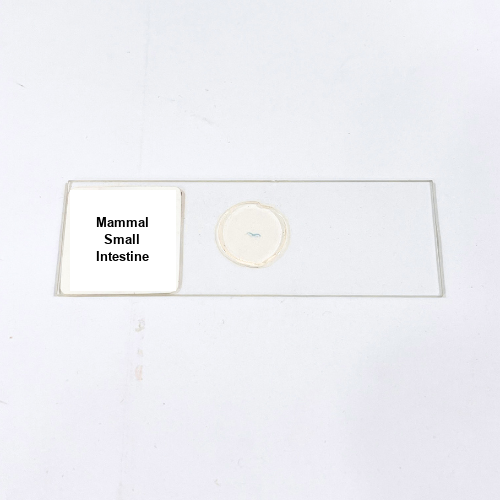
Product Name – Mammal Small Intestine
Quantity/Pack Size – Standard Pack
Form – Prepared Microscope Slide
Grade – Laboratory Grade
Application – Microscopic Examination of Intestinal Tissue
Product Overview
The Mammal Small Intestine slide is a meticulously prepared specimen designed to display the intricate anatomy of the small intestine. This laboratory-grade slide clearly illustrates the mucosal layer, with its characteristic villi and microvilli structures, the underlying submucosa, muscularis externa, and serosa. Staining techniques are applied to differentiate cellular components, including epithelial cells, goblet cells, and connective tissue fibers, allowing detailed visualization of tissue architecture. The slide is mounted on high-quality glass with a durable mounting medium to ensure long-term preservation and stability. This preparation reveals the arrangement of circular and longitudinal muscle layers responsible for peristaltic movement, as well as lymphatic and vascular structures within the submucosa. The slide offers clear contrast between tissue layers, making it suitable for precise examination of villus morphology, epithelial organization, and connective tissue frameworks. Compatible with standard laboratory microscopes, it ensures ease of use, reliable results, and consistent microscopic performance. This professional-grade small intestine section combines accurate tissue sectioning, quality staining, and durable mounting for reliable laboratory analysis and observation of mammalian intestinal anatomy.
FAQs
1. What layers of the intestine are visible on this slide?
The slide shows mucosa with villi, submucosa, muscularis externa, and serosa.
2. Can the slide be used with all compound microscopes?
Yes, it is compatible with standard laboratory compound microscopes.
3. Are there alternative intestinal slides available?
Yes, longitudinal sections and other digestive tissue slides are available for comparative studies.
4. How should the slide be stored for longevity?
Keep in a clean, dry environment, avoid exposure to direct sunlight, and handle by edges only.
5. What ensures the tissue remains preserved over time?
The tissue is fixed, stained professionally, and sealed with a laboratory-grade mounting medium for durability.