Description
Specifications Table
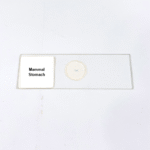
Product Name – Mammal Stomach
Quantity/Pack Size – Single Slide
Form – Prepared Microscope Slide
Grade – Laboratory Grade
Application – Histological Tissue Structure Analysis
Product Overview
The Mammal Stomach prepared slide presents a transverse section of mammalian stomach tissue with all major histological layers intact and clearly visible. It includes the mucosa with its epithelial lining and gastric glands, the submucosa with connective tissue components, the muscularis layer composed of smooth muscle fibers, and the outer serosa. The slide is mounted under a durable cover glass with a stable mounting medium to prevent bubble formation and ensure long-lasting preservation of the specimen. Laboratory-grade preparation guarantees high optical clarity, excellent contrast, and accurate representation of tissue morphology, enabling clear differentiation between the various layers. This slide is designed for detailed microscopic observation, allowing researchers and educators to study tissue organization, cellular arrangement, and the structural relationships within the stomach. It is suitable for repeated use and long-term storage while maintaining structural integrity. The slide provides a reliable view of mammalian stomach anatomy for histological analysis, supporting in-depth understanding of tissue morphology and vascular arrangements, ensuring that critical cellular and tissue details are preserved for accurate microscopic evaluation.
1. What magnification is ideal for viewing this slide?
Optimal observation is achieved at 100x to 400x magnification to clearly view tissue layers and cellular details.
2. How should the slide be stored?
Store in a dry, dust-free environment, away from direct sunlight and extreme temperatures to preserve tissue quality.
3. Is this slide compatible with digital imaging systems?
Yes, it works well with digital microscopes for capturing high-resolution images of stomach tissue.
4. Are there alternative mammalian organ slides available?
Yes, slides for mammal liver, heart, kidney, and intestine are also available for comparative studies.
5. How is the specimen sourced and prepared?
The mammal stomach tissue is ethically sourced and carefully preserved using laboratory-grade techniques to maintain histological accuracy.