Description
Specifications Table
Product Material – Borosilicate Glass
Grade – Laboratory Grade
Application – Measurement of Magnetic Susceptibility
Product Overview
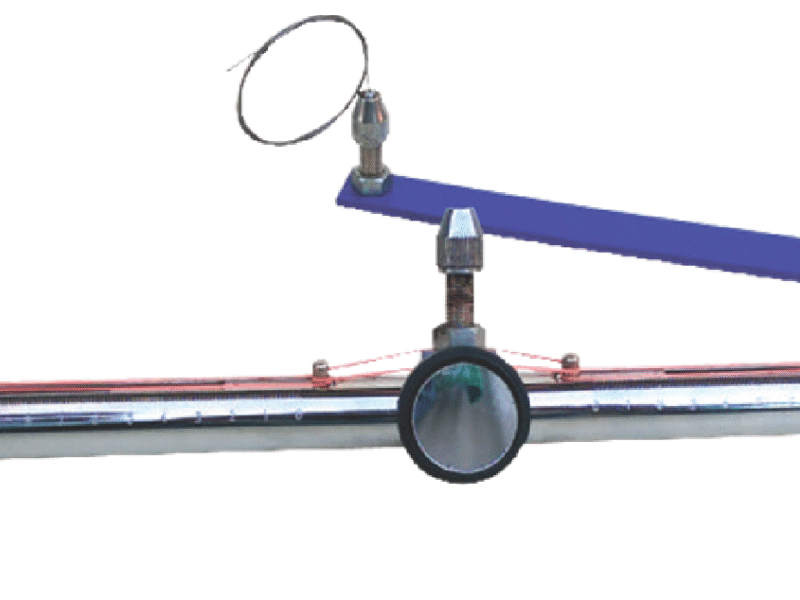
The Measurement of Susceptibility of Paramagnetic Solution (Quinck’s Tube Method) is a specialized apparatus designed for precise determination of magnetic susceptibility in paramagnetic solutions. Constructed from high-quality borosilicate glass, this laboratory-grade instrument ensures durability and resistance to thermal stress, making it ideal for consistent experimental conditions. The Quinck’s Tube method provides a reliable technique for observing the behavior of paramagnetic substances when subjected to a magnetic field, allowing researchers to obtain accurate measurements without the need for a traveling microscope. The design of the tube facilitates clear visualization of the liquid meniscus, which is critical for calculating susceptibility values. This apparatus is essential for experiments requiring quantitative analysis of magnetic properties in solutions, offering reproducibility and precision in scientific investigations. The simplicity of the setup ensures ease of use while maintaining high standards of accuracy, making it a valuable tool for advanced laboratory applications.
FAQs
1. What is the primary application of Quinck’s Tube?
Quinck’s Tube is primarily used for measuring the magnetic susceptibility of paramagnetic solutions in laboratory settings.
2. Is this apparatus compatible with all paramagnetic solutions?
Yes, it is designed to work with a wide range of paramagnetic solutions, provided they are compatible with borosilicate glass.
3. Can this method be used without a traveling microscope?
Yes, this specific setup is designed for measurements without requiring a traveling microscope, simplifying the process.
4. How should Quinck’s Tube be stored when not in use?
Store the tube in a clean, dry place, preferably in a protective case or box to prevent damage from dust or physical impact.
5. What are the alternatives to Quinck’s Tube for susceptibility measurements?
Alternatives include Gouy’s balance and Evans’ method, though Quinck’s Tube offers simplicity and precision for liquid samples.