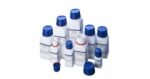
Description
Specifications Table
Product Name – METHYL ORANGE INDICATOR SOLUTION
Quantity/Pack Size – 125 ml
Form – Liquid Solution
Grade – Laboratory Reagent
Application – pH Indicator for Titration
Product Overview
Methyl Orange Indicator Solution is a highly reliable laboratory reagent designed for precise pH detection in acidic and weakly basic environments. This synthetic dye solution exhibits a distinct color change from red to yellow within the pH range of 3.1 to 4.4, making it an essential tool for titration procedures and acid-base equilibrium studies. Formulated with analytical-grade purity, this indicator maintains consistent performance across repeated experiments, ensuring accurate endpoint determination in volumetric analysis. The solution is prepared in a stable aqueous medium, preventing degradation and maintaining its effectiveness over extended storage periods. Its high sensitivity to pH variations makes it particularly valuable for detecting subtle changes in acidic conditions. The 125ml packaging provides an optimal balance between sufficient quantity for multiple experiments and convenient storage in laboratory settings. This indicator solution meets stringent quality standards, offering researchers and students a dependable reagent for their analytical chemistry requirements.
FAQs
1. What is the exact pH range where methyl orange changes color?
The color transition occurs between pH 3.1 (red) and pH 4.4 (yellow), with the most noticeable change around pH 3.8-4.0.
2. Can this indicator be used for non-aqueous titrations?
Methyl orange is primarily designed for aqueous solutions and may not perform reliably in non-polar solvents or organic media.
3. How should I store this indicator solution for maximum shelf life?
Store in a cool, dark place in its original tightly sealed container to prevent evaporation and light-induced degradation.
4. What alternatives exist for detecting higher pH ranges?
Phenolphthalein (pH 8.3-10.0) or thymol blue (pH 8.0-9.6) are common alternatives for basic pH detection.
5. Does the concentration affect the color transition sharpness?
The standard concentration provides optimal color change; dilution may result in less distinct transitions and reduced sensitivity.